Yoga Poses That Relieve Stress and Anxiety

Introduction: Yoga’s Quiet Power in a Noisy World
In the relentless pace of modern life, stress and anxiety often become constant companions—settling in our muscles, shaping our posture, and clouding our thoughts. Yoga offers more than a physical workout; it is an intentional practice of breath, movement, and mindfulness that taps into the body’s own calming mechanisms.
Science continues to affirm that yoga can significantly lower stress levels, quiet anxious thinking, and promote a state of physical ease combined with mental clarity. By blending mindful postures, steady breath, and neurological balance, yoga doesn’t just stretch the body—it creates a pathway back to groundedness and emotional resilience.
Understanding the Science: How Yoga Calms the Mind and Body
The Neurological Impact of Movement and Breath
When you practice yoga, you are doing more than moving through physical shapes—you are actively influencing how your brain processes stress. Studies show that consistent yoga practice strengthens the prefrontal cortex, the brain’s command center for focus, decision-making, and emotional regulation. At the same time, it helps quiet the amygdala, the part of the brain responsible for fear and rapid stress responses.
Over time, the combination of asanas (postures) and meditation has been linked to increased hippocampal volume—an area involved in memory, learning, and stress adaptation. The result is a nervous system that can respond to life’s challenges with greater balance rather than constant reactivity.
Yoga’s Broader Wellness Benefits
While its calming influence is often the most celebrated, yoga’s benefits go far beyond emotional regulation. Regular practice has been shown to reduce inflammatory markers in the body, improve cardiovascular health, and enhance sleep quality. It can help regulate the stress hormone cortisol and increase heart rate variability—a key measure of resilience.
For beginners, even simple, accessible postures can bring noticeable improvements in mood, energy levels, and overall well-being without the need for long or advanced sessions.
Core Yoga Poses to Ease Stress and Anxiety
Grounding and Restorative Postures for Parasympathetic Balance
When stress hits, the body often shifts into fight-or-flight mode, keeping the sympathetic nervous system on high alert. Restorative poses help engage the parasympathetic nervous system, signaling to the body that it’s safe to relax.
- Child’s Pose (Balasana) – Folding forward with knees wide and forehead resting on the mat creates a gentle cocoon for the body. Deep, slow breathing in this posture helps lower heart rate and bring a sense of grounded surrender.
- Bridge Pose (Setu Bandhasana) – This gentle backbend opens the chest and lifts the heart, counteracting the collapsed posture of stress while soothing the nervous system.
- Legs-Up-the-Wall (Viparita Karani) – An inversion that drains tension from tired legs, reverses circulation, and can significantly lower stress hormone levels.
- Corpse Pose (Savasana) – Often used to close a yoga session, this pose integrates the benefits of your practice while fostering deep stillness and conscious release.
Fluid Movements That Release Tension
Stress can make the body feel rigid. Gentle, breath-linked movement can restore fluidity and ease.
- Cat–Cow Stretch (Marjaryasana–Bitilasana) – Alternating between spinal flexion and extension brings mobility to the back, syncs movement with breath, and melts away stiffness.
- Standing Forward Fold (Uttanasana) – Letting the upper body hang heavy toward the floor soothes the nervous system and encourages an inward focus.
- Seated or Head-to-Knee Forward Bend – These variations create a nurturing inward turn, calming overstimulation and inviting deep release in the hamstrings and spine.
Poses That Ground, Strengthen, and Clear the Mind
Some poses work not just to relax but also to build stability and focus—qualities that help manage anxiety long-term.
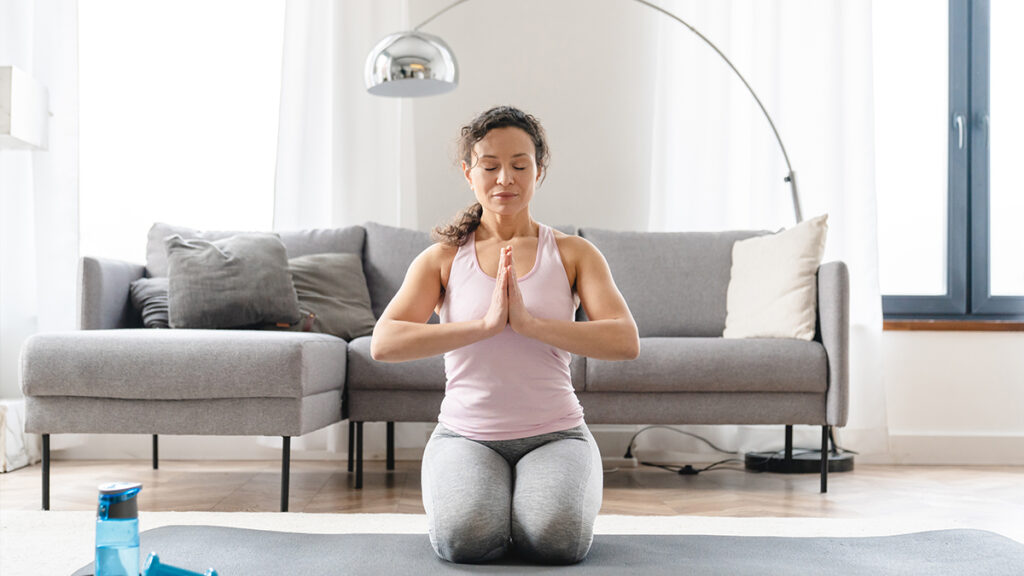
- Hero Pose (Virasana) – A seated posture that anchors you physically and mentally, making it easier to breathe deeply and calmly.
- Tree Pose (Vrikshasana) – A balancing pose that requires concentration and stillness, encouraging you to root into the present moment.
- Extended Triangle Pose (Utthita Trikonasana) – A full-body stretch that opens the chest, strengthens the legs, and releases tension while enhancing circulation.
Short Sequences to Reset Quickly
A Four-Minute Resilience Flow
You don’t need an hour-long class to feel the benefits of yoga. Research suggests that even a brief sequence—such as Warrior II, Downward-Facing Dog, and a Modified Half-Lotus Stretch—can measurably reduce anxiety, improve clarity, and enhance heart rate variability in just a few minutes.
Evening Wind-Down Protocols
Before bed, a gentle 20–30 minute series of stretches and slow breathing can help release the mental and physical load of the day. When paired with mindfulness or meditation, these routines prepare the body for deep, restorative sleep and a calmer emotional state.
Building a Sustainable Practice for Anxiety Relief
Mindfulness as the Core of the Flow
What makes yoga uniquely powerful for stress relief is its integration of mindfulness. Moving with awareness, listening to your body, and returning your attention to the breath transforms yoga from a workout into a form of active meditation. This mindful approach helps you stay present and prevents the mind from spiraling into worry.
Scaling with Ease and Safety
You don’t need to start with complicated poses or long classes. Even holding a single grounding posture for a minute can shift your mental state. If you are new to yoga or dealing with injury, start with guided sessions or beginner-friendly classes to ensure proper alignment and safety.
Weaving Yoga into Daily Life
The most profound benefits come from consistency rather than intensity. Incorporating a few poses after waking up, using a short flow as a midday reset, or practicing restorative postures before bed can make yoga an integrated part of your lifestyle rather than an occasional escape.
Real-World Impacts: Yoga as a Therapeutic Tool
Yoga is not just anecdotal self-care—it’s a clinically recognized complementary therapy. In controlled studies, individuals with generalized anxiety disorder who practiced Kundalini yoga reported greater reductions in symptoms compared to those who received stress education alone. These findings underline yoga’s potential as a legitimate part of mental health support.
Conclusion: Yoga as Your Gentle Anchor
In a world overflowing with stimuli and mental noise, yoga offers a return to simplicity. It invites you to pause, breathe, and inhabit your body fully. Whether you sink into Child’s Pose to release worry or stand tall in Tree Pose to find balance, the practice serves as a reliable anchor in turbulent times.
Over weeks and months, yoga not only helps ease immediate stress but also builds the mental and emotional resilience needed to navigate life’s inevitable challenges with grace.