Mindful Breathing Exercises You Can Do Anywhere


Introduction
In today’s fast-moving world, stress has become almost unavoidable. Demanding work schedules, digital overload, financial worries, and personal challenges often leave little space for stillness or calm. Amid this constant whirlwind, one of the most effective tools for finding peace is also the simplest and most accessible—our breath. Breathing, something we do automatically thousands of times a day, can become a source of grounding and clarity when we learn to approach it with mindfulness.
Mindful breathing is a practice that draws attention to the present moment by focusing on the rhythm and depth of each inhale and exhale. It is flexible, discreet, and can be practiced anywhere—at a desk, in the car, while standing in line, or just before going to bed. Beyond the immediate sense of relaxation it provides, mindful breathing offers long-term benefits: reduced stress, sharper focus, emotional stability, and improved resilience.
This article explores the science behind mindful breathing, its connection to mental and physical well-being, and several techniques you can practice anywhere. By learning to breathe with intention, you can turn everyday moments into opportunities for calm, clarity, and balance.
The Science of Mindful Breathing
How Breathing Affects the Nervous System
Breathing is closely linked to the autonomic nervous system, which regulates both our stress responses and our ability to relax. When we experience stress, the sympathetic nervous system takes charge, leading to shallow, rapid breaths, an accelerated heartbeat, and muscle tension. Mindful breathing, on the other hand, activates the parasympathetic nervous system—often referred to as the “rest and digest” mode. By slowing and deepening the breath, cortisol levels drop, heart rate decreases, and the body receives a signal to relax.
This physiological shift is why mindful breathing can be so effective in moments of anxiety. By consciously adjusting the rhythm of your breath, you can directly influence your body’s stress response and create calm even in tense situations.
The Connection Between Breath and Mind
Breath is not only physical—it is deeply connected to our mental state. When we are anxious, our breaths often become short and shallow. When we are calm, they naturally lengthen and slow. Learning to observe and adjust the breath helps stabilize the mind. Neuroscience research supports this, showing that mindful breathing stimulates brain areas associated with focus and emotional regulation. In essence, when you regulate your breath, you also regulate your mind.
Benefits of Practicing Mindful Breathing
Reducing Stress and Anxiety
Mindful breathing immediately counteracts stress by slowing the body’s physiological responses. Over time, regular practice builds resilience, making you less reactive to daily triggers. This gradual strengthening of the nervous system helps you manage challenges with greater ease and emotional balance.
Improving Focus and Productivity
In an age of constant distraction, mindful breathing sharpens concentration. Each time you anchor attention to the breath, you train the mind to return to the present moment. This skill improves productivity, enhances creativity, and makes it easier to stay engaged with tasks, whether at work, school, or home.
Enhancing Emotional Regulation
Breathing with awareness creates a natural pause between stimulus and response. Instead of reacting impulsively in moments of anger, fear, or frustration, mindful breathing gives you space to respond thoughtfully. This not only helps regulate emotions but also strengthens relationships by reducing unnecessary conflict.
Supporting Physical Health
Mindful breathing benefits the body as much as the mind. It improves oxygen flow, enhances lung function, lowers blood pressure, and supports cardiovascular health. It also reduces muscle tension, improves digestion, and strengthens the immune system. Many people find that breathing exercises enhance sleep quality and boost daily energy levels, contributing to overall well-being.
Mindful Breathing Exercises for Everyday Life
Diaphragmatic Breathing
Also called belly breathing, diaphragmatic breathing emphasizes drawing air deeply into the lungs by engaging the diaphragm. Unlike shallow chest breathing, this technique encourages the abdomen to expand with each inhale, improving oxygen exchange and activating relaxation responses.
Diaphragmatic breathing can be practiced while sitting comfortably, standing, or lying down. With consistency, it becomes second nature, supporting calm throughout the day.
Box Breathing
Box breathing, often used by athletes and military professionals, follows a simple four-part cycle: inhale, hold, exhale, and pause—all for equal counts. For example, inhale for four counts, hold for four, exhale for four, and pause for four before beginning again.
This structured, rhythmic method balances the nervous system, enhances concentration, and provides an effective reset during stressful moments. Its clear framework makes it particularly helpful for beginners who prefer guided breathing patterns.
Alternate Nostril Breathing
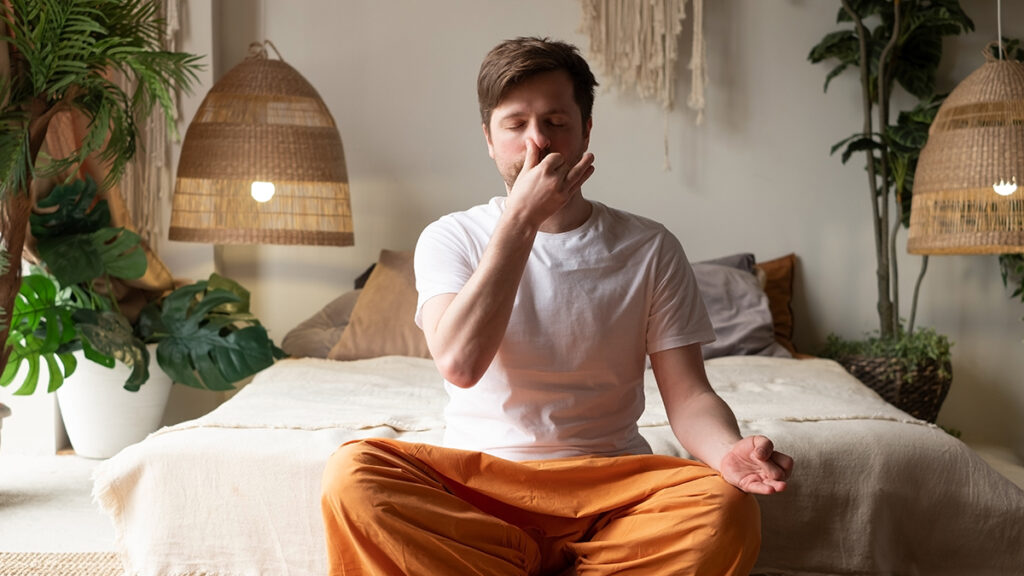
Rooted in yogic traditions, alternate nostril breathing involves inhaling through one nostril while closing the other, then switching. This technique is said to harmonize the left and right hemispheres of the brain, fostering balance between logic and creativity, while also calming the nervous system.
Though it may feel unusual at first, with practice, alternate nostril breathing becomes a grounding exercise that can ease anxiety and sharpen mental clarity.
4-7-8 Breathing
The 4-7-8 technique emphasizes longer exhales to slow the heart rate and promote relaxation. To practice, inhale for four counts, hold for seven, and exhale for eight. The extended exhalation signals the body to release tension.
This method is particularly effective before bedtime, helping calm a restless mind and prepare the body for sleep. Practiced regularly, it also serves as a reliable stress management tool during the day.
Breath Counting Meditation
Breath counting meditation combines breathing awareness with simple counting. You silently count each inhale and exhale, often up to a set number such as five or ten, then restart. Whenever your mind drifts, you gently bring it back by resuming the count.
This simple yet powerful practice anchors the mind, builds patience, and enhances focus. Because it requires no special environment, it can be practiced anywhere—from a crowded train to a quiet office.
Integrating Mindful Breathing Into Daily Life
During Work and Study
Workplaces and classrooms are full of stressors, making them perfect settings for mindful breathing. Taking a few intentional breaths before a meeting, exam, or presentation can reduce anxiety and improve clarity. Short breathing breaks throughout the day also enhance focus, reduce fatigue, and prevent burnout.
In Times of Conflict or Emotion
Emotional conversations and conflicts can escalate quickly. Pausing for a mindful breath helps create space between emotion and reaction. This pause fosters empathy, reduces impulsivity, and leads to more thoughtful, compassionate communication.
While Commuting
Traffic jams and crowded trains often increase stress. By focusing on slow, steady breaths during a commute, you can transform frustration into an opportunity for mindfulness. Instead of dreading the journey, you reclaim it as time to center yourself.
Before Sleep
When stress lingers at night, it often interferes with rest. Mindful breathing techniques such as 4-7-8 breathing help quiet the mind and slow the nervous system, preparing the body for restorative sleep. Practicing mindful breathing in bed creates a natural, drug-free way to improve sleep quality.
Overcoming Challenges in Mindful Breathing
Managing Restlessness
It’s common for beginners to feel restless when starting a breathing practice. The mind naturally wanders, and sitting still may feel uncomfortable. This restlessness is not failure—it is part of the process. Each time you gently bring your attention back to the breath, you strengthen focus and patience.
Letting Go of Perfectionism
Some expect immediate results from mindful breathing, and when dramatic calm doesn’t arrive right away, frustration can set in. But mindful breathing is less about perfection and more about practice. The benefits accumulate over time, often in subtle but powerful ways.
Finding Time in Busy Schedules
Many people believe they don’t have time for mindfulness. In reality, mindful breathing requires only minutes and can be done anywhere. By incorporating it into existing routines—during commutes, before meals, or while waiting in line—you can turn ordinary moments into opportunities for calm.
The Long-Term Impact of Mindful Breathing
Building Emotional Resilience
With regular practice, mindful breathing fosters resilience. Instead of being overwhelmed by stress, individuals develop the ability to pause, breathe, and approach challenges with clarity. This resilience helps in navigating personal and professional hurdles more effectively.
Enhancing Overall Well-Being
Mindful breathing contributes to a holistic sense of wellness. It sharpens mental clarity, supports emotional balance, and improves physical health. Over time, these benefits accumulate, reducing the risk of stress-related illnesses and promoting long-term vitality.
Fostering Mindful Living
Perhaps the most profound gift of mindful breathing is that it cultivates mindfulness in every area of life. When you practice awareness of your breath, you train your mind to remain present in daily activities as well. Eating, walking, working, and conversing all become more intentional, leading to a richer and more meaningful life experience.
Conclusion
Mindful breathing exercises are simple yet transformative practices that can be done anytime, anywhere. Whether it is diaphragmatic breathing, box breathing, alternate nostril breathing, or the 4-7-8 technique, each method provides tools for stress relief, focus, and emotional resilience. By integrating these practices into daily life—at work, during commutes, in emotional situations, or before sleep—you gain access to a steady source of calm and clarity.
The beauty of mindful breathing lies in its accessibility. It requires no equipment, no special setting, and only a few minutes of your time. What begins as a small habit quickly becomes a lifestyle—anchoring you in the present, helping you manage stress, and nurturing long-term well-being. In a noisy, demanding world, mindful breathing serves as a constant reminder of balance, resilience, and the power of mindfulness.