The Rise of Edge AI: Smarter Devices at the Edge


Introduction: The Dawn of Edge AI
Artificial intelligence (AI) has transformed industries across the globe, empowering machines to perceive, analyze, and make decisions in ways once reserved for human cognition. Traditionally, AI systems have depended on centralized cloud infrastructures—powerful data centers capable of processing enormous datasets and executing advanced algorithms. But today, a new paradigm is taking shape: Edge AI.
Edge AI shifts the power of AI from distant cloud servers to local devices—smartphones, IoT sensors, industrial machines, autonomous vehicles, and more. By processing data at the edge of the network, close to where it’s generated, Edge AI introduces major improvements in speed, privacy, autonomy, and efficiency.
As technology evolves, Edge AI is no longer a concept for the future—it’s happening now. This article explores the rise of Edge AI, examining its core technologies, real-world applications, advantages, challenges, and how it is reshaping our digital ecosystem.
Understanding Edge AI: What Does It Mean?
Defining Edge AI and Its Core Components
Edge AI is the integration of artificial intelligence capabilities directly into edge devices—hardware located near the data source, as opposed to remote cloud data centers. Instead of sending data to the cloud for processing, Edge AI handles it locally, using specialized chips and lightweight software.
These edge devices rely on technologies like neural processing units (NPUs), AI accelerators, and compact AI frameworks to perform functions such as image recognition, voice processing, predictive analytics, and anomaly detection—all in real-time, without needing constant communication with the cloud.
This local intelligence gives devices the power to make decisions instantly, with greater responsiveness and reduced reliance on internet connectivity.
How Edge AI Differs from Cloud AI
Cloud AI harnesses the vast computing resources of centralized data centers and is ideal for training large models and analyzing massive datasets. However, it comes with limitations—notably, the delays involved in transmitting data and the dependency on stable internet connections.
Edge AI addresses these concerns by keeping the data and processing on the device itself. This reduces latency, minimizes bandwidth usage, and significantly enhances privacy, since sensitive data doesn’t need to leave the device.
In practice, many modern AI systems combine both approaches. Edge devices handle real-time tasks, while more complex analysis or model training is offloaded to the cloud, forming a hybrid AI architecture.
Technological Enablers of Edge AI
Advancements in Hardware Design
The surge in Edge AI has been fueled by major strides in hardware innovation. Today’s edge devices are equipped with processors that offer high performance and low energy consumption, making them suitable for small, portable, and battery-powered gadgets.
Leading examples include Google’s Tensor Processing Units (TPUs), Apple’s Neural Engine, Qualcomm’s AI Engine, and NVIDIA’s Jetson modules. These chips are designed to accelerate AI operations such as convolution and matrix multiplication—key to running deep learning models efficiently.
As semiconductor technology advances and chips become more compact and powerful, AI capabilities are being embedded in an ever-wider range of devices, from smartwatches to drones.
Efficient AI Algorithms and Model Compression
Running AI on edge devices requires models that are not just accurate but also lightweight. Researchers have developed techniques like model pruning, quantization, and knowledge distillation to shrink model sizes while maintaining performance.
Architectures such as MobileNet, SqueezeNet, and TinyML are specifically designed for constrained environments. These models consume less memory and processing power, enabling real-time AI on devices with limited resources.
Thanks to these advancements, Edge AI can deliver strong performance without sacrificing battery life or processing speed.
Applications of Edge AI: Smarter Devices in Action
Consumer Electronics and Smart Homes
Edge AI is making everyday technology smarter and more efficient. Modern smartphones now support facial recognition, voice commands, and real-time translation directly on the device—no internet connection needed.
In smart homes, Edge AI powers intelligent thermostats, security cameras, and appliances that learn user behavior, optimize energy use, and enhance security. Local processing means these devices can operate even when internet access is interrupted, ensuring better reliability.
Additionally, processing biometric and personal data on-device enhances user privacy, reducing the risk of data breaches.
Industrial Automation and Predictive Maintenance
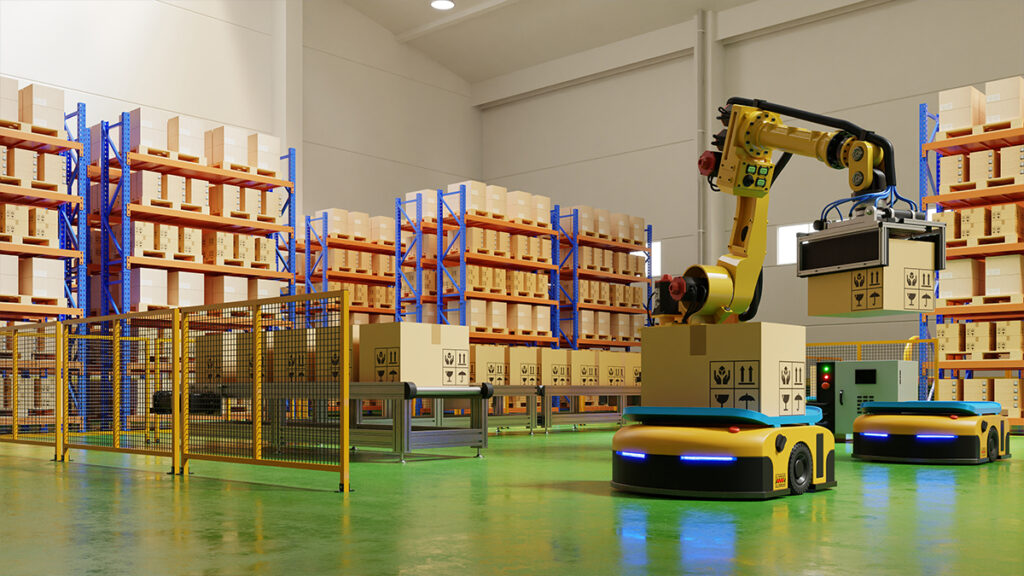
In manufacturing, Edge AI is central to the Industry 4.0 revolution. Smart sensors installed on machines analyze data like temperature, vibration, and pressure in real time, enabling predictive maintenance.
Instead of waiting for equipment to fail, Edge AI detects anomalies and warns operators in advance—minimizing downtime and avoiding costly repairs. Since the data is processed on-site, factories can maintain operations even with limited connectivity.
Combined with robotics, Edge AI enhances precision, efficiency, and adaptability on the production floor.
Healthcare: Remote Monitoring and Diagnostics
Edge AI is transforming healthcare by enabling real-time patient monitoring. Wearables equipped with local AI can continuously track heart rates, blood glucose, or sleep patterns, and issue alerts immediately when abnormalities are detected.
This on-device processing is especially valuable in emergency situations, where quick response times are critical. It also allows for remote care in rural or underserved areas with limited internet access.
By keeping data local, Edge AI ensures compliance with strict privacy laws like HIPAA and GDPR, while giving clinicians faster insights and reducing strain on healthcare systems.
Autonomous Vehicles and Smart Mobility
Autonomous vehicles, drones, and delivery robots rely on Edge AI for split-second decision-making. Sensors and cameras onboard these machines feed real-time data into AI models that identify obstacles, plan paths, and adjust behavior instantly.
This local processing enables these systems to operate safely without relying on cloud connections, especially in areas with poor connectivity. Edge AI also plays a critical role in smart traffic systems, which adapt in real time to reduce congestion and improve urban mobility.
The decentralized nature of Edge AI boosts the security and reliability of transportation networks, making them more resilient and responsive.
Advantages of Edge AI Over Cloud-Only Models
Reduced Latency and Real-Time Decision Making
One of the standout benefits of Edge AI is its speed. In situations like autonomous driving or medical emergencies, even a slight delay can have serious consequences.
By eliminating the need to send data to the cloud and wait for a response, Edge AI enables instantaneous reactions. This speed is essential for safety-critical and time-sensitive applications.
Enhanced Data Privacy and Security
As concerns about data privacy grow, Edge AI provides a compelling solution. By keeping data on-device, it significantly reduces the risk of unauthorized access, data breaches, or surveillance.
This local approach also supports federated learning, a technique where devices collaboratively train AI models without sharing raw data. It allows for collective intelligence while maintaining individual privacy—crucial in sectors like healthcare, finance, and personal tech.
Bandwidth and Cost Efficiency
Sending massive amounts of data from edge devices to the cloud is both expensive and inefficient. Edge AI lightens the load by filtering and analyzing data locally, transmitting only essential information when necessary.
This reduces network congestion, cuts down on cloud service costs, and makes systems more scalable and robust, especially in low-bandwidth environments.
Challenges and Limitations of Edge AI
Hardware Constraints
Despite progress, edge devices still lag behind cloud infrastructure in terms of processing power, memory, and battery life. Designing AI models that perform well within these limits remains a key challenge.
Ongoing innovation in low-power chip design and model optimization is essential to balance performance with efficiency—especially for applications that demand complex AI reasoning.
Security Risks at the Edge
While Edge AI improves privacy, it also introduces new security threats. Physical access to edge devices increases the risk of tampering, theft, or malware infections.
Securing these devices requires strong encryption, secure boot protocols, and regular updates. The wide variety of edge hardware makes it difficult to standardize security practices across ecosystems.
Development and Maintenance Complexity
Building AI applications for edge environments is complex. Developers must account for diverse hardware platforms, operating conditions, and user behaviors.
Maintaining and updating these systems remotely adds further complexity, especially as devices scale across vast networks. Effective over-the-air updates and remote debugging tools are critical for long-term success.
The Future of Edge AI: Trends and Opportunities
The evolution of Edge AI is just beginning. Several emerging trends are set to accelerate its adoption and reshape the way we think about intelligent systems:
Integration with 5G and Beyond: Ultra-fast, low-latency networks will enhance Edge AI by supporting real-time communication and seamless hybrid architectures between edge and cloud.
Federated Learning and Collaborative AI: Decentralized model training allows for privacy-preserving AI development while leveraging distributed data from millions of devices.
AIoT (Artificial Intelligence of Things): The convergence of AI and IoT will power smart cities, autonomous agriculture, and intelligent manufacturing on a massive scale.
Neuromorphic and Quantum Edge AI: New computing paradigms promise exponential leaps in performance, enabling far more complex AI to run efficiently on edge devices.
Conclusion: Edge AI as the Cornerstone of Intelligent Future Devices
Edge AI marks a pivotal shift in the way intelligent systems are designed and deployed. By moving processing closer to where data is created, it empowers faster, more secure, and more autonomous technology.
From consumer electronics and healthcare to manufacturing and smart transportation, Edge AI is enabling innovation at the edge—where devices are smarter, systems are more resilient, and users are in control.
While challenges remain, continuous progress in hardware design, algorithm efficiency, and security infrastructure is driving Edge AI toward ubiquity. As we embrace this decentralized approach, we move closer to a future where intelligence is everywhere, privacy is protected, and real-time decision-making is the new norm.