Autonomous Vehicles: Where AI Meets the Road

Introduction
In today’s rapidly evolving technological landscape, autonomous vehicles (AVs) stand at the forefront of innovation, representing one of the most visible and impactful applications of artificial intelligence (AI) in daily life. What once seemed confined to science fiction or research prototypes is now part of real-world testing—self-driving cars delivering groceries, ferrying passengers, and navigating public roads under increasingly complex conditions.
This shift isn’t just about automation—it’s about transformation. At the core of AV development is the fusion of AI disciplines such as machine learning, computer vision, and real-time decision-making. These capabilities empower vehicles not only to interpret their environment but also to act on it—aiming to rival, and eventually surpass, human driving capabilities. With promises of improved road safety, reduced congestion, and broader mobility access, autonomous vehicles are poised to reshape how we move through the world.
This article explores the technological evolution, the architecture powering AVs, the real-world applications and benefits, the challenges that remain, and the road ahead for AI-powered mobility.
The Evolution of Autonomous Driving
From Cruise Control to Full Autonomy
Autonomous driving didn’t happen overnight. It began decades ago with basic automation features like cruise control in the 1950s and anti-lock braking systems in the 1970s. These early innovations laid the groundwork for more sophisticated driver-assistance systems.
By the early 2000s, vehicles began to incorporate features like adaptive cruise control, lane-keeping assistance, and automatic emergency braking—technologies that are now considered standard and represent Levels 1 and 2 in the Society of Automotive Engineers (SAE) autonomy scale.
The holy grail, however, is Level 5 autonomy—a vehicle that can operate entirely without human input in all conditions. While that milestone hasn’t yet been achieved commercially, major players like Waymo, Tesla, Cruise, and Nvidia are testing Level 4 systems that function autonomously under specific geofenced conditions.
The Role of AI in Driving Autonomy Forward
AI is the true engine of autonomous driving. Unlike traditional programming, which follows rigid instructions, AI models learn from vast datasets to make decisions in real time. This enables AVs to adapt to new and unpredictable driving conditions—whether it’s a cyclist weaving through traffic or a sudden road closure.
Through deep learning, AVs process inputs from cameras, LiDAR, GPS, and radar to identify objects, recognize patterns, and make context-aware decisions. These systems continuously improve as more data is collected, allowing them to navigate with increasing intelligence and confidence.
How Autonomous Vehicles Work
Sensor Fusion and Perception Systems
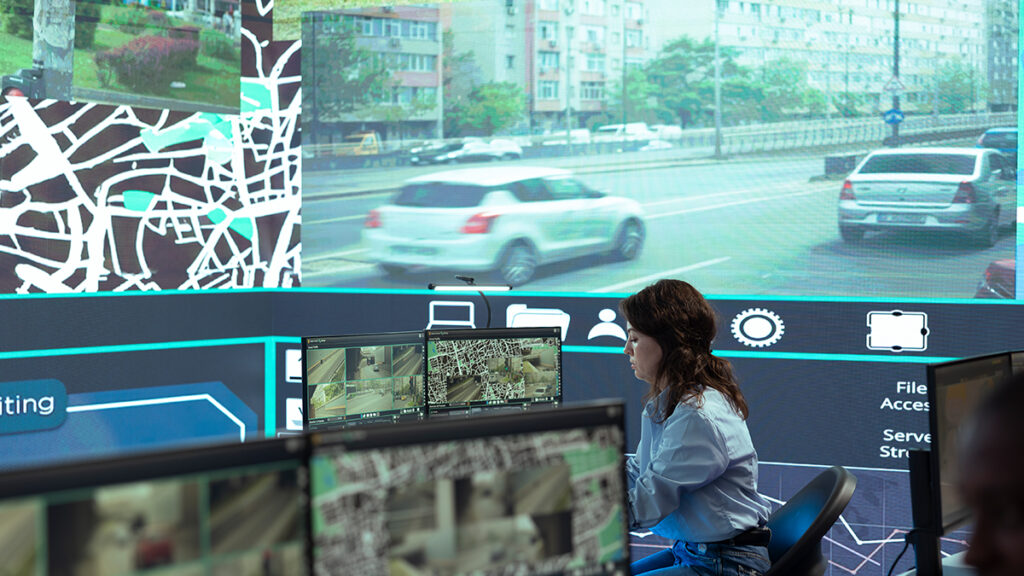
Perception is everything for a self-driving car. To “see” the world around them, AVs use sensor fusion—a process that combines inputs from LiDAR, radar, cameras, ultrasonic sensors, and GPS. Each sensor contributes uniquely: cameras capture visual detail, radar excels in poor visibility, and LiDAR provides 3D mapping.
AI algorithms then process this data to detect, classify, and track objects like vehicles, pedestrians, signs, and road markings. For example, convolutional neural networks (CNNs) may identify a partially hidden stop sign, while recurrent neural networks (RNNs) help predict the motion of other road users.
Localization and Mapping
Knowing exactly where the vehicle is on a map—down to the centimeter—is essential. GPS helps with general positioning, but it’s not precise enough on its own. That’s where high-definition (HD) maps and techniques like simultaneous localization and mapping (SLAM) come in.
These maps are detailed with information about road shapes, signs, traffic patterns, and more. AI systems match real-time sensor inputs to these maps to refine positioning, allowing the vehicle to make precise maneuvers—even in complex urban environments.
Decision-Making and Path Planning
Once an AV understands where it is and what surrounds it, it must decide what to do next—whether that’s changing lanes, yielding to a pedestrian, or merging into traffic. AI handles these decisions using behavior prediction and path planning algorithms.
Machine learning helps AVs anticipate the likely movements of nearby vehicles and people. Reinforcement learning—a technique where AI improves through trial and error—is commonly used to teach AVs how to make better driving decisions over time. These choices are then converted into commands for acceleration, braking, and steering.
Real-World Applications and Progress
Urban Mobility and Ride-Sharing
Autonomous ride-hailing is already underway in select urban areas. Waymo and Cruise are operating driverless taxi services in places like Phoenix and San Francisco. These vehicles function within predefined areas and are monitored remotely, collecting data to improve performance with each trip.
AI enables these services to adapt to urban complexities such as pedestrians, bicycles, and unprotected left turns. The more these vehicles drive, the more data they gather—and the better their systems become.
Logistics and Autonomous Freight
In long-haul transportation, autonomous trucks are being tested by companies like TuSimple and Aurora. Highways, with their predictable conditions and minimal intersections, are ideal for AV freight systems.
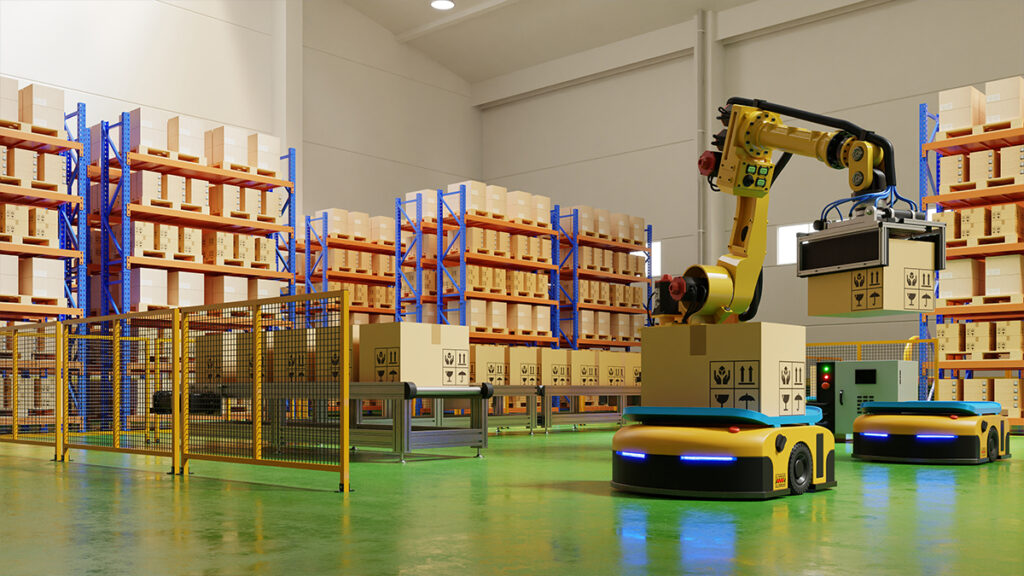
AI helps optimize routes, reduce fuel consumption, and mitigate driver fatigue. These trucks can operate around the clock, improving logistics efficiency and delivery timelines. In warehouses and during last-mile deliveries, autonomous robots and drones are also becoming more common—guided by AI for navigation and coordination.
Benefits of AI-Driven Autonomous Vehicles
Enhancing Road Safety
One of the strongest arguments for autonomous vehicles is safety. Human error accounts for the vast majority of traffic accidents. AI doesn’t get distracted, tired, or impaired. Systems like automatic emergency braking and blind-spot detection already reduce accidents—and full autonomy aims to go even further.
Removing human fallibility from the equation could drastically reduce injuries and fatalities on the road.
Increasing Efficiency and Accessibility
AVs equipped with AI can communicate with each other and with infrastructure (a concept known as V2X communication) to improve traffic flow and reduce emissions. They can avoid congested areas, time traffic light cycles, and optimize fuel usage.
AI also opens up mobility to those who can’t drive—such as the elderly, disabled, or people without licenses. Self-driving vehicles could bring unprecedented independence and convenience to millions.
Economic and Environmental Impact
Autonomous vehicles promise economic savings through reduced labor costs, fewer accidents, and lower insurance premiums. Environmentally, AI helps optimize driving behavior and route selection to minimize emissions.
As EVs become the backbone of autonomous fleets, the synergy between clean energy and intelligent transportation systems could significantly contribute to climate goals and smarter urban development.
Challenges and Concerns
Technical and Safety Hurdles
Despite the hype, achieving full autonomy is still incredibly complex. Edge cases—unusual, unpredictable scenarios like animals crossing the road or malfunctioning traffic lights—remain difficult to handle.
Understanding social cues, such as a pedestrian’s intention to cross or a driver waving another through, is still a challenge for AI. These subtle interactions are second nature to humans but tricky for machines to interpret accurately.
Ethical and Legal Considerations
There are tough ethical questions to address. In an unavoidable accident, how should an AV choose between two harmful outcomes? And if an AV does crash, who’s responsible—the car manufacturer, the software developer, or the passenger?
Privacy is another concern. AVs collect and process enormous amounts of data, raising issues around surveillance, consent, and cybersecurity.
Job Displacement and Societal Impact
Widespread AV adoption could displace millions of jobs in transportation and delivery. While new roles will emerge—like AI maintenance and fleet management—there must be proactive investment in retraining programs and social support systems.
There’s also the risk of inequality. If AV services are only available in wealthier neighborhoods or to premium users, they could deepen the divide in access to transportation.
The Road Ahead: Future of AI and Autonomous Driving
Full autonomy won’t happen overnight. Most experts envision a hybrid landscape for years to come, where human drivers and AVs share the road. Gradual integration through systems like AI-assisted parking or highway driving will bridge the gap.
Advancements in edge computing, 5G connectivity, and better AI training will be key. Strong collaboration between government agencies, automakers, tech firms, and academic institutions will also be essential to navigate regulatory, technical, and societal hurdles.
As datasets grow and algorithms improve, the future of autonomous vehicles becomes more tangible. But getting there will require shared standards, robust safety testing, and ongoing public engagement to build trust.
Conclusion
Autonomous vehicles are more than just a technological novelty—they’re a glimpse into the future of how we live and move. Powered by AI, these vehicles have the potential to make transportation safer, more accessible, and more efficient. Their integration into society could reduce emissions, boost economic productivity, and reshape urban life.
Yet, this transformation comes with responsibility. The success of AVs depends not only on innovation but on ethics, equity, and thoughtful implementation. As we accelerate toward autonomy, the real challenge is not just building smart cars—but building a smarter world around them.