How AI Is Revolutionizing Supply Chain Management

Introduction
Today’s global supply chains are intricate, fast-paced, and highly interdependent. They connect manufacturers, suppliers, logistics companies, retailers, and consumers in a vast and often fragile web. As companies grapple with volatile market demands, transport disruptions, raw material shortages, and geopolitical uncertainty, traditional supply chain strategies are being pushed to their limits.
Enter artificial intelligence (AI). Once seen as the domain of futuristic tech, AI has now become an essential pillar of modern supply chain management. Its ability to process massive volumes of data, predict outcomes, automate processes, and generate actionable insights is fundamentally reshaping how companies operate.
From demand forecasting and inventory management to logistics optimization and supplier risk analysis, AI is unlocking new levels of responsiveness and efficiency. This article explores how AI is revolutionizing every stage of the supply chain, the technologies powering this transformation, real-world applications, the challenges that come with adoption, and the future of AI-driven supply ecosystems.
The Integration of AI into Supply Chain Infrastructure
Understanding the Technology Stack
At the core of AI’s impact on the supply chain lies a powerful combination of machine learning, computer vision, and natural language processing. These technologies allow systems to simulate human intelligence while analyzing real-time data at a scale that humans simply can’t match.
Machine learning models sift through historical and live data—everything from sales records to weather updates and traffic reports—to identify patterns and predict what might happen next. Computer vision enables real-time monitoring of warehouses and production lines using cameras and sensors. And natural language processing makes it possible for machines to interpret contracts, emails, and customer feedback.
When paired with enterprise software systems, IoT devices, and big data platforms, these technologies form a connected supply chain capable of learning, adapting, and continuously improving.
Data as the New Supply Chain Currency
All of this AI power relies on one key ingredient: data. Every purchase, shipment, customer query, and temperature sensor generates data that AI can use to learn and improve. But not all companies are ready to take advantage of it.
Organizations with outdated systems, disconnected platforms, or poor data hygiene are often unable to unlock the true potential of AI. By contrast, companies that have embraced digital transformation—investing in cloud computing, data integration, and real-time analytics—can leverage AI to make smarter, faster decisions across their entire supply chain.
AI in Demand Forecasting and Planning
Moving Beyond Historical Averages
Traditional demand planning is often based on averages and assumptions. It’s static, backward-looking, and slow to react. AI flips that model on its head.
Using a wide range of data sources—from market conditions and consumer behavior to social media trends and economic indicators—AI-powered forecasting engines can make more nuanced, timely, and accurate predictions. These models update in real-time, allowing companies to respond immediately to sudden changes in demand, like a viral product or an unexpected shortage.
During the COVID-19 pandemic, many businesses with AI-driven forecasting tools managed to respond quickly to market disruptions, avoiding stockouts and capitalizing on demand spikes. Others, using older models, were left scrambling.
Scenario Planning and Risk Modeling
AI also empowers companies to model different “what-if” scenarios. What if there’s a supplier delay in China? What if consumer demand drops by 30% next quarter? What if a new competitor enters the market?
Machine learning models can simulate these possibilities and estimate the likely outcomes. This gives supply chain planners a deeper understanding of potential risks and enables them to develop more effective contingency plans before a crisis hits.
AI in Inventory Optimization and Warehousing
Balancing Availability and Cost
Keeping the right amount of inventory is a balancing act. Too much, and you waste money on storage and risk product obsolescence. Too little, and you risk stockouts and lost sales. AI helps strike the perfect balance.
By analyzing demand trends, lead times, supplier performance, and external conditions, AI systems recommend how much of each item to keep on hand. They also dynamically adjust safety stock levels based on real-time market changes, which is crucial for perishable goods or seasonal products.
Smart Warehousing and Robotics
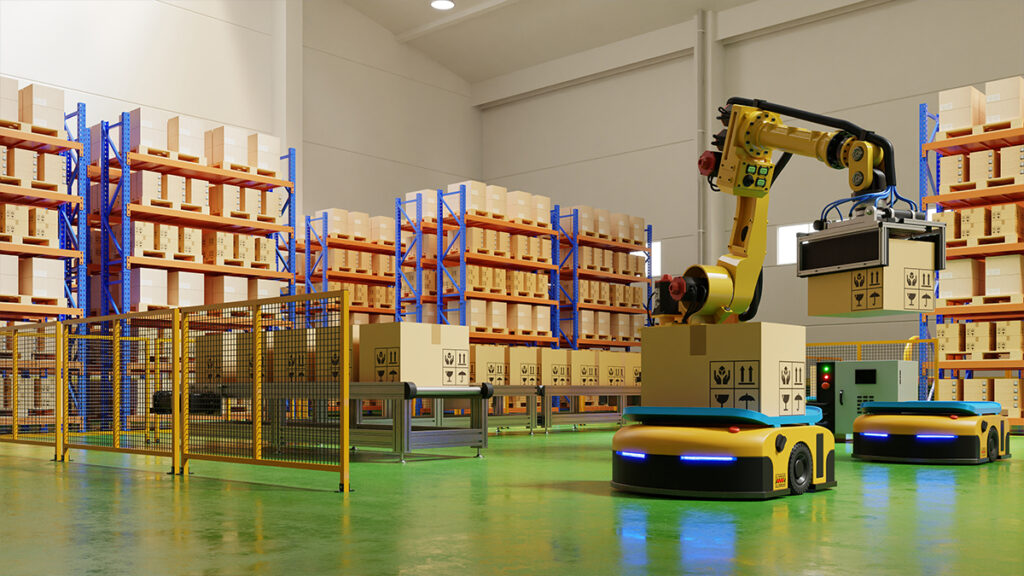
In the warehouse, AI is powering a wave of automation. With sensors, cameras, and machine learning, warehouses can track inventory levels automatically, identify misplaced items, and guide robots through optimized picking and packing routes.
Companies like Amazon and Alibaba operate smart fulfillment centers where robots and AI systems work alongside humans. These centers not only boost speed and accuracy but also optimize space and reduce operating costs.
AI also enables predictive maintenance for warehouse equipment, reducing unexpected downtime by identifying signs of wear or failure before they become major problems.
AI in Logistics and Transportation Management
Route Optimization and Real-Time Tracking
Transport is one of the most expensive and complex parts of the supply chain. AI is helping streamline it by selecting the most efficient delivery routes based on real-time factors like weather, traffic, and fuel usage.
AI tools also allow for dynamic rerouting—changing a vehicle’s path in real time due to accidents, road closures, or customs delays. This reduces delivery times, fuel consumption, and customer complaints.
Fleet management systems can also track driver behavior, vehicle wear, and fuel efficiency, providing insights that help companies improve safety and reduce maintenance costs.
Autonomous Vehicles and Drones
AI is at the heart of the autonomous logistics revolution. Self-driving trucks and drones, though still in development, use AI to navigate roads, avoid obstacles, and deliver packages in hard-to-reach areas.
While regulations and safety concerns still need to be addressed, companies like UPS, FedEx, and Tesla are investing heavily in this space. As the technology matures, autonomous delivery could reshape the future of last-mile logistics, especially in urban and rural regions.
AI in Supplier Relationship and Risk Management
Evaluating and Monitoring Supplier Performance
Managing supplier relationships is often reactive, based on gut feelings or historical data. AI makes it proactive and data-driven.
By analyzing delivery performance, contract compliance, pricing trends, and defect rates, AI systems provide a clear picture of each supplier’s strengths and weaknesses. Procurement teams can use this information to negotiate better contracts, improve performance, and switch vendors before problems arise.
AI also automates time-consuming tasks like generating RFQs, matching purchase orders to suppliers, and evaluating bids—speeding up procurement cycles and improving accuracy.
Proactive Risk Detection
AI doesn’t just look at internal data. It also scans news sites, financial records, and social media for external risks. If one of your key suppliers is facing political instability or financial trouble, AI can flag the issue early, giving you time to respond.
In an interconnected global economy, even small disruptions can snowball. AI helps supply chain leaders stay one step ahead by identifying threats before they escalate.
Challenges and Ethical Considerations
Data Quality and Integration
AI depends on clean, consistent data. Many companies still struggle with siloed systems, outdated databases, and incompatible formats. These issues limit AI’s effectiveness.
To fully benefit from AI, companies need to invest in better data infrastructure—consolidating platforms, standardizing inputs, and ensuring real-time access across departments. Migrating to the cloud and embracing APIs are often essential first steps.
Workforce Displacement and Upskilling
With automation comes concern about job loss. AI may reduce the need for manual warehouse labor, repetitive procurement tasks, or basic logistics coordination. But it also creates new roles in AI oversight, analytics, and strategic planning.
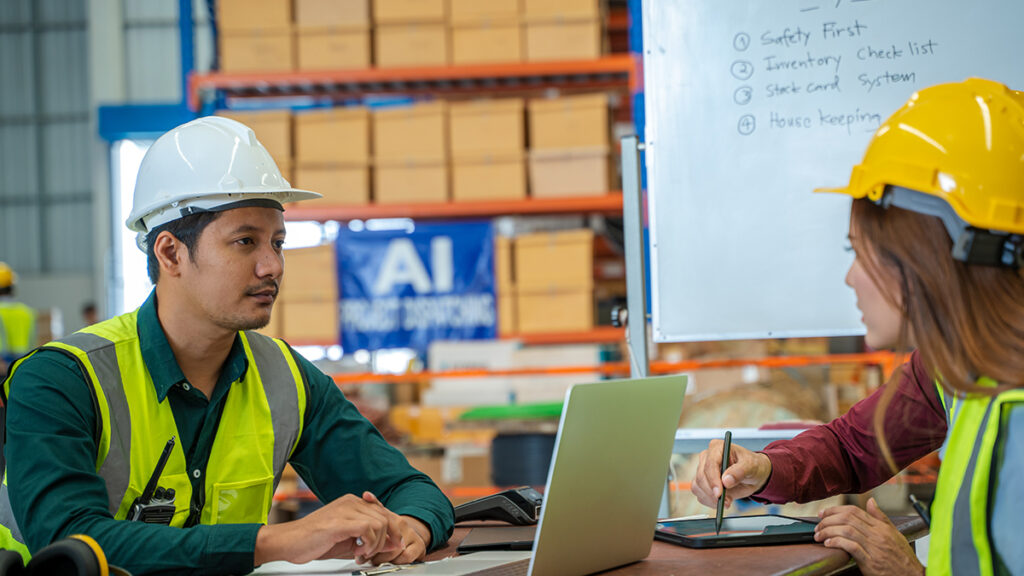
Businesses need to prepare their teams for this shift. Upskilling, retraining, and fostering collaboration between humans and AI are key to building a future-ready supply chain workforce.
Security and Privacy
AI also introduces cybersecurity risks. Hackers can target supply chain data, steal trade secrets, or disrupt operations. Companies must implement strong encryption, monitoring tools, and access controls to protect sensitive information.
Ethical considerations around AI decisions—such as pricing, sourcing, or labor—must also be addressed. Responsible AI use requires transparency, accountability, and compliance with privacy laws.
The Future of AI in Supply Chain Management
AI is evolving rapidly. Soon, we’ll see even deeper integration with technologies like blockchain (for traceability), digital twins (to simulate supply chain scenarios), and edge computing (for real-time processing at remote sites).
AI will also play a critical role in sustainability. By optimizing delivery routes, reducing excess inventory, and tracking emissions, it helps companies lower their environmental footprint.
Small businesses, too, will benefit from AI-as-a-service tools that provide advanced capabilities without the need for in-house data scientists. With user-friendly platforms and cloud-based solutions, AI will become more accessible than ever.
Ultimately, the most successful supply chains will be those that combine the analytical power of AI with human judgment, creativity, and ethical leadership.
Conclusion
Artificial intelligence is transforming supply chain management—making operations faster, smarter, and more resilient. Whether it’s forecasting demand, managing inventory, optimizing transportation, or reducing risk, AI enhances every stage of the process.
Yet, for all its promise, AI adoption must be approached carefully. It requires high-quality data, workforce readiness, robust security, and a commitment to ethical use. The goal isn’t to replace supply chain professionals—but to empower them with tools that enable better decision-making and innovation.