Health Benefits of Mindful Walking

Introduction: Walking With Awareness in a Fast-Paced World
In a culture where speed is celebrated and stillness is rare, the idea of simply walking—slowly, attentively, and without distraction—can feel almost revolutionary. Our days are often filled with to-do lists, endless notifications, and the pressure to keep moving. Yet, not all movement needs to be rushed or goal-oriented. Sometimes, the most profound stillness can be found in motion.
Mindful walking is a practice that blends gentle movement with conscious awareness. Unlike the kind of walking we do on autopilot—often while mentally reliving the past or worrying about the future—mindful walking invites us to be fully present. With every step, we become attuned to our breath, our surroundings, and the sensations within our bodies.
This form of moving meditation offers a powerful alternative to sitting practices. It provides the dual benefit of physical activity and mental clarity, creating a bridge between body and mind. As interest in mindfulness continues to grow, more people are discovering that mindful walking can be both a grounding practice and a meaningful form of self-care.
Understanding Mindful Walking: More Than Just a Stroll
Rooted in ancient meditation traditions, particularly within Buddhism, mindful walking has long been used as a way to center the mind and cultivate awareness. For Buddhist monks, walking meditation is a daily ritual—a way to maintain mindfulness beyond the cushion. In this tradition, every step is a meditation, and every breath is a return to the present moment.
Modern mindful walking holds true to this philosophy. It’s not about walking quickly or even reaching a destination. The pace is slow, deliberate, and purposeful. It is an invitation to slow down, observe your internal state, and reconnect with the physical world. Over time, the practice becomes a refuge—a way to clear mental clutter and create a calm, reflective space wherever you are.
Physical Health Benefits of Mindful Walking
Enhancing Cardiovascular Health
Although it’s slower and more deliberate than brisk walking, mindful walking still offers substantial benefits for cardiovascular health. Regular walking supports heart health by increasing blood flow, improving circulation, and lowering blood pressure. When paired with mindfulness, the effects can be even more pronounced.
Stress is a major contributor to heart disease. Because mindful walking helps reduce cortisol levels, it creates a gentler internal environment for your heart to function. This combination of movement and mindfulness acts as a natural form of stress management, supporting long-term heart health.
Supporting Joint and Muscle Health
Mindful walking provides a low-impact form of exercise that strengthens muscles, promotes joint flexibility, and encourages better posture and alignment. When practiced on soft natural surfaces like grass, sand, or forest paths, it becomes even more joint-friendly.
This gentle, consistent movement is ideal for people recovering from injuries or dealing with chronic conditions such as arthritis. Over time, it helps improve balance and stability, making it easier to move through life with greater ease and less discomfort.
Boosting the Immune System
Studies have shown that moderate, regular physical activity can enhance immune function—and mindful walking is no exception. It helps lower inflammation, reduce stress hormones, and promote restful sleep, all of which are critical to maintaining a healthy immune system.
Mindful breathing during walking also plays a role. As you breathe more deeply and slowly, oxygen delivery improves throughout your body, supporting cell function and overall vitality. In essence, your body becomes more resilient—not just physically, but holistically.
Mental Health Benefits of Mindful Walking
Reducing Stress and Anxiety
Mindfulness, at its core, is a practice of presence. When paired with walking, it becomes a moving sanctuary—a space where stress and anxiety naturally begin to dissolve. As you tune into the rhythm of your steps and the sound of your breath, your nervous system shifts from fight-or-flight mode into rest-and-digest.
Even just ten to twenty minutes of mindful walking a day has been shown to ease anxious thoughts, regulate breathing, and promote a calmer mental state. It provides a break from overstimulation and mental overdrive, making space for peace to emerge.
Enhancing Focus and Concentration
Distraction is a constant challenge in modern life. Practicing mindful walking trains the brain to return to the present, over and over again. This act of mental redirection strengthens the mind’s ability to focus, making it easier to stay on task in everyday situations.
The benefits are especially relevant for students, professionals, and creatives who require sustained concentration. With regular practice, the mental clarity cultivated through mindful walking can improve both productivity and creativity.
Improving Mood and Emotional Regulation
Mindful walking has been linked to improved mood and emotional balance. The practice encourages the release of endorphins—natural mood elevators—while helping regulate stress hormones like cortisol. It also nurtures a sense of self-compassion and acceptance, which is crucial for emotional well-being.
Walking in natural environments amplifies these effects. Research suggests that mindful walking outdoors, particularly in green spaces, can reduce symptoms of depression, elevate mood, and help individuals process emotions more effectively.
Spiritual and Emotional Dimensions of Mindful Walking
Deepening Connection With the Present Moment
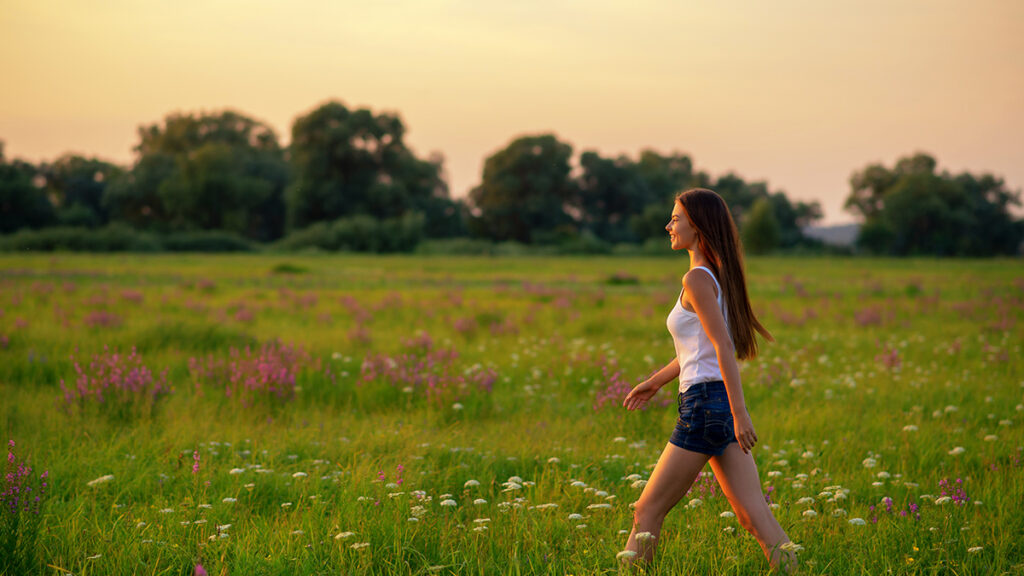
Mindful walking heightens awareness of the world around you. Instead of racing past the details of your environment, you begin to notice them: the way light filters through trees, the sensation of the wind against your skin, the quiet rhythm of your breath and steps.
This kind of attention fosters a profound sense of gratitude. By being fully present in your walk, you deepen your appreciation for the simple beauty of everyday life—beauty that often goes unnoticed in the rush of daily responsibilities.
Encouraging Self-Reflection and Insight
Many people find walking to be a catalyst for deep thought. When mindfulness is added to the experience, your inner dialogue becomes more focused, more compassionate, and more reflective.
Without the intrusion of phones or noise, your thoughts have room to settle. Insights arise naturally. Whether you’re processing a challenge, making a decision, or simply reconnecting with yourself, mindful walking becomes a powerful space for clarity and emotional release.
Mindful Walking in Nature: Amplifying the Benefits
While mindful walking can be practiced anywhere, its impact is magnified in natural environments. Nature provides a multisensory experience that gently draws your attention outward. The scent of pine, the crunch of leaves underfoot, the color of the sky—all of it encourages mindfulness.
This is the essence of Shinrin-yoku, or “forest bathing,” a Japanese practice closely aligned with mindful walking. Studies show it reduces cortisol, lowers blood pressure, and increases a sense of calm and happiness. In nature, mindful walking becomes more than just a practice—it becomes a profound communion with the world around you.
Mindful Walking and Modern Wellness Trends
Integrating Mindful Walking Into Daily Life
One of the greatest strengths of mindful walking is how easy it is to incorporate into daily life. You don’t need any special gear or setting. Whether it’s during your morning commute, a lunchtime break, or a quiet evening walk around the block, mindful walking fits seamlessly into most routines.
The key is intention. Rather than walking while checking your phone or mentally rehearsing your to-do list, choose to walk with awareness—however briefly. Even a few minutes of presence can shift your mood and energy for the rest of the day.
Combining Mindful Walking With Other Practices
Mindful walking can also complement other wellness practices. Some people pair it with deep breathing exercises, affirmations, or gratitude reflections. Others use it as a moving meditation between yoga sessions, or as a wind-down ritual before bed.
In 2025, many wellness retreats and programs now include mindful walking as a core practice—often alongside digital detox, plant-based eating, journaling, and nature immersion. It’s a testament to the growing recognition of its value as a tool for holistic health.
Scientific Backing for Mindful Walking
Mindful walking isn’t just a feel-good trend—it’s backed by science. Research in neuroscience and psychology shows that mindfulness-based practices, including walking meditation, can positively influence brain function and structure. Areas of the brain associated with memory, empathy, and emotional regulation have been shown to grow with regular practice.
Studies also point to reduced stress biomarkers, better sleep quality, and improved overall life satisfaction in individuals who practice mindful walking. And for those who struggle with seated meditation, it offers a more accessible entry point—one that keeps both mind and body engaged.
Conclusion: Walking Your Way to Wellness
In its simplicity, mindful walking holds profound potential. It is a practice that gently weaves together movement, breath, awareness, and intention—inviting you to slow down and be present in your own life.
As the world grows faster and louder, mindful walking offers a soft resistance. It reminds us that healing doesn’t always require grand gestures. Sometimes, it begins with a single, conscious step.
Whether you’re walking in nature or along a city street, taking those steps with awareness is a powerful act of self-care. Over time, mindful walking can strengthen your body, calm your mind, regulate your emotions, and reconnect you with the world around you.