The Rise of Generative AI in Creative Industries

Introduction
Artificial intelligence has steadily evolved from being a tool of efficiency to a powerful creative collaborator. At the forefront of this transformation is generative AI, a branch of machine learning designed not just to interpret information but to produce entirely new content—text, images, music, and more—based on patterns it has learned. What once seemed like a futuristic idea has now become a practical, everyday part of how content is created.
Across fields such as music, design, storytelling, advertising, and filmmaking, generative AI is reshaping traditional creative workflows. With tools like OpenAI’s GPT and DALL·E, Stability AI’s Stable Diffusion, and Midjourney capturing widespread attention, these technologies are more than just innovative—they’re redefining what creativity can be.
This article delves into the transformative role generative AI plays in today’s creative sectors. It examines how these tools are used, the benefits they bring, the concerns they raise, and the future they’re helping to shape at the intersection of art and machine intelligence.
Understanding Generative AI and Its Capabilities
Generative AI refers to systems that can create original content by identifying and mimicking patterns in data. These tools differ from traditional AI models, which are typically designed to analyze or predict. Instead, generative AI systems use neural networks—such as generative adversarial networks (GANs), variational autoencoders (VAEs), and transformer-based architectures—to compose content from scratch.
After being trained on massive datasets—sometimes billions of examples—these models can produce human-like writing, realistic images, melodic music, and even functional code with astonishing accuracy. Creators now rely on user-friendly platforms like GPT-4, Midjourney, RunwayML, and Adobe Firefly to generate content rapidly across industries including media, entertainment, fashion, and publishing.
What was once a niche area of AI research has now become an essential part of real-world creative production.
Generative AI in Visual Arts and Design
Revolutionizing Image Creation
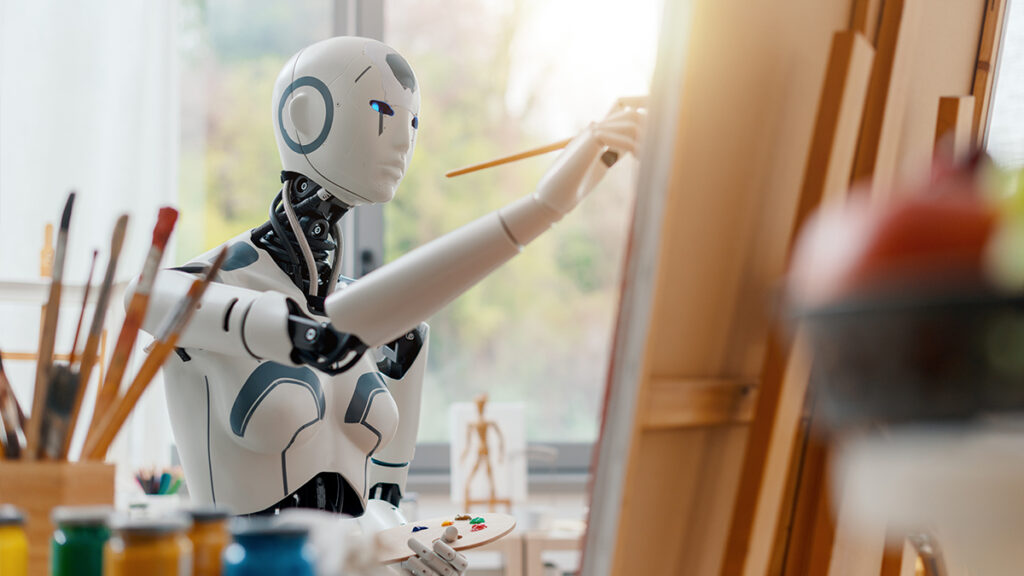
In the visual arts, generative AI has introduced a profound shift. Artists can now turn simple text prompts into vivid concept art, digital illustrations, or photorealistic images using tools like Midjourney and Stable Diffusion. This significantly accelerates the creative process and lowers the cost of experimentation, allowing more time for refinement and iteration.
Graphic designers, too, are using generative AI to create logos, campaign visuals, packaging prototypes, and social media content at a scale and variety that were previously impossible. These AI-generated visuals are not only making their way into advertising but are also being displayed in art galleries and featured in editorial spreads—challenging long-held definitions of creative authorship.
Bridging Creativity and Commercial Demand
In the commercial world, generative AI supports both the ideation and execution phases of visual design. Creative teams use it to explore different styles, automate production tasks, and rapidly develop mood boards or mockups. Industries like architecture, fashion, and interior design benefit from AI’s ability to visualize concepts and produce client-ready iterations quickly.
Though concerns about originality and copyright remain, many creatives view generative AI not as a threat, but as a collaborator—one that broadens their imagination instead of replacing it.
The Role of Generative AI in Writing and Storytelling
Transforming Content Creation
In publishing, journalism, and marketing, generative AI is becoming a go-to content engine. Platforms like ChatGPT, Jasper.ai, and Copy.ai are used to generate articles, blog posts, product descriptions, email newsletters, and even SEO-optimized web pages. This helps brands maintain high output without overwhelming human teams.
Writers in film and literature are also experimenting with AI to generate outlines, suggest plot twists, or build dialogue. Journalists, meanwhile, use AI to automate transcriptions, summaries, and fact-based reporting. While AI writing still lacks the full emotional nuance of a human author, its speed and versatility make it indispensable in time-sensitive contexts.
Enhancing Creative Writing and Ideation
Beyond commercial applications, generative AI is becoming an integral part of the creative writing process. Poets and fiction authors use AI tools to overcome writer’s block or explore new story structures. By adjusting prompts, they can simulate everything from Shakespearean verse to dystopian sci-fi, making these tools a playground for literary creativity.
This collaborative form of storytelling—where human intent meets machine possibility—is giving rise to a new genre of hybrid authorship, one that blends algorithmic suggestions with emotional resonance.
AI in Music, Film, and Audio Production
Composing with Machines
In music, AI is no longer just a background tool—it’s a co-composer. Platforms such as AIVA, Amper Music, and Soundraw allow users to create customizable soundtracks based on mood, tempo, or genre. These tools are widely used for creating royalty-free music for films, ads, and video games.
Musicians use AI to generate harmonies, layer beats, or test song structures. Others analyze fan data with AI to fine-tune their releases or create personalized playlists. While machines can’t replicate the soul of a live performance, they serve as an experimental partner—one that inspires, accelerates, and supports human creativity.
Film Editing, VFX, and Video Creation
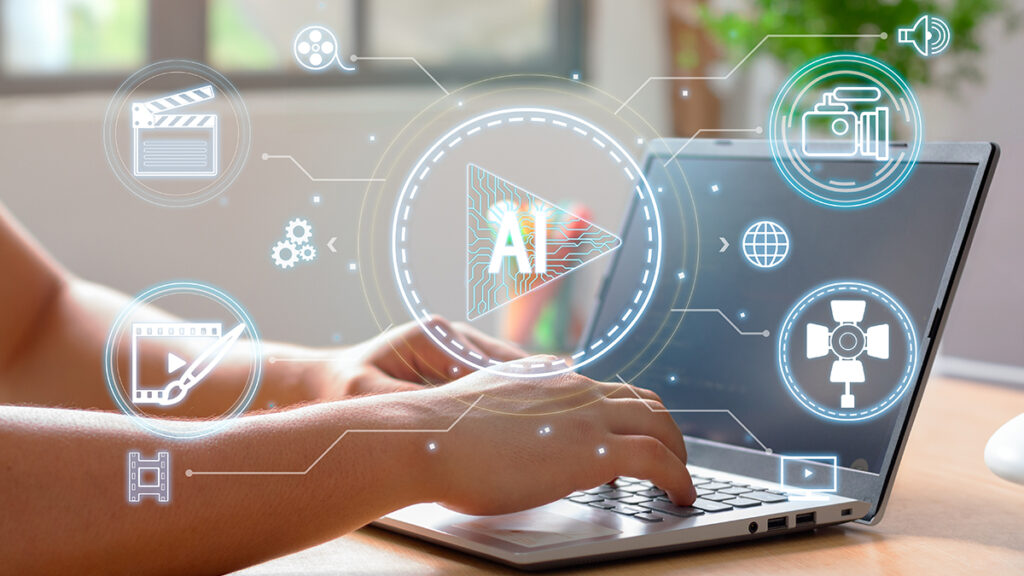
Video creation has also been transformed. AI tools like RunwayML and Pika Labs enable creators to generate animations, edit video clips, or produce special effects with minimal resources. Filmmakers use AI for everything from script generation and scene composition to voice dubbing and character animation.
Even small content creators—on platforms like TikTok or YouTube—are now using AI to streamline editing, generate subtitles, or enhance video quality. As these tools continue to democratize high-end production capabilities, creators of all levels can produce content that rivals studio-level work.
Generative AI in Advertising and Marketing
Hyper-Personalized Campaigns
In the fast-moving world of advertising, generative AI is driving hyper-personalization. Based on user data, AI can craft targeted ads—complete with tailored copy, imagery, and calls to action—for different demographics and platforms. This leads to better engagement, higher conversion rates, and more relevant customer experiences.
Major brands such as Coca-Cola and Heinz have already launched AI-powered campaigns, tapping into the creative potential of machines to produce fresh, innovative content. AI tools are also revolutionizing A/B testing by instantly generating multiple ad variations and analyzing performance across audiences.
Streamlining Content Pipelines
For digital marketers, generative AI is becoming the backbone of content operations. From brainstorming ideas and drafting captions to producing email sequences and researching keywords, these tools accelerate every stage of content creation. They also help track sentiment and predict campaign outcomes—enabling smarter, data-driven strategies.
This combination of automation and creative finesse empowers small marketing teams to compete with agencies, expanding what’s possible even on limited budgets.
The Democratization of Creativity
Lowering Barriers to Entry
Perhaps the most radical impact of generative AI is its ability to make creativity more accessible. What once required expensive software or technical expertise can now be accomplished through intuitive, browser-based tools. Aspiring artists, indie musicians, and content creators can build portfolios, develop brand identities, or launch passion projects with minimal financial or educational hurdles.
Platforms like Canva, Adobe Firefly, and ChatGPT are giving voice to those previously sidelined in the creative economy. This democratization is fueling an explosion of diverse perspectives and styles.
Encouraging Creative Experimentation
Because AI produces results quickly and affordably, creators are free to experiment without fear of failure. Artists can try multiple iterations. Writers can test narrative arcs. Marketers can launch micro-campaigns to gauge reactions.
This “fail fast, learn faster” dynamic fosters innovation. It encourages risk-taking—one of the essential ingredients in any creative breakthrough. As AI becomes more intuitive and responsive, it will continue to evolve into a real-time creative partner, not just a behind-the-scenes tool.
Challenges and Ethical Considerations
Questions of Ownership and Authenticity
As generative AI becomes more involved in producing original work, thorny legal and philosophical questions arise. Who owns the rights to an AI-generated painting, song, or screenplay? Is the creator the person who wrote the prompt, the developer of the AI model, or the machine itself?
Furthermore, audiences increasingly value authenticity. While AI can emulate tone and structure, it cannot replicate human emotion or lived experience. There’s a growing concern that mass-produced AI content may dilute originality and make it harder for authentic voices to stand out.
Bias, Representation, and Data Ethics
Many generative AI models are trained on massive internet datasets, which often reflect existing biases and stereotypes. Without careful curation, these biases can show up in generated content—creating exclusionary or offensive outputs.
There are also ethical concerns about data sourcing. Were copyrighted materials used to train the model? Are culturally sensitive artworks being appropriated? Ensuring fairness, transparency, and responsible development is essential to prevent harm and build trust in the creative AI ecosystem.
The Future of Generative AI in Creative Industries
Looking ahead, generative AI will shift from being a tool to becoming a true creative collaborator. With the rise of multimodal models—capable of working across text, image, and audio—AI tools will integrate even more deeply into the creative workflow. We may soon see a single system that drafts a marketing plan, writes the copy, generates visuals, and scores the accompanying soundtrack.
AI’s tight integration with popular creative software will make the technology seamless and invisible, quietly powering everything from brainstorming to post-production. More sectors—such as education, architecture, and gaming—are poised to harness generative AI for idea visualization, content customization, and immersive storytelling.
Still, the human touch will remain vital. The most powerful outcomes will come from a hybrid model, where AI handles repetition, speed, and variation while humans contribute judgment, culture, and empathy.
Conclusion
The rise of generative AI is redefining how content is conceived, created, and consumed across creative industries. Whether in design, music, writing, or marketing, AI is enabling people to dream bigger, move faster, and break creative boundaries.
But this revolution comes with responsibility. Ethical practices, fair data use, and a strong sense of purpose must guide the development and use of these tools. As we enter a new era of human–machine collaboration, the goal isn’t to let AI replace us—but to help us create more boldly, more inclusively, and more meaningfully than ever before.