Study guides for high school chemistry

Introduction
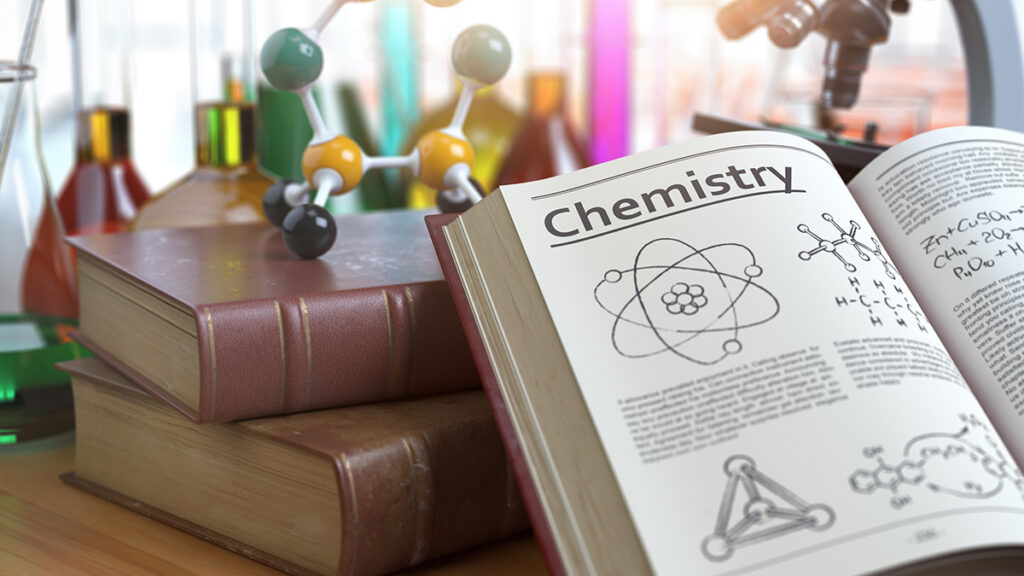
For many students, high school chemistry is both a challenge and an opportunity. On one hand, it introduces abstract ideas—like atomic orbitals, bond energies, and reaction kinetics—that demand careful thought. On the other, it unlocks a new way of seeing the world: why metals corrode, how medicines work, why ice floats, or how energy fuels living organisms. Chemistry sits at the intersection of physics and biology, making it a bridge subject that lays the groundwork for advanced science.
Yet despite its importance, chemistry often feels overwhelming. Balancing chemical equations, visualizing molecular shapes, or mastering stoichiometry requires more than memorization—it requires conceptual clarity, practice, and structured guidance. This is precisely where study guides for high school chemistry become invaluable. A good study guide breaks down complexity into digestible pieces, organizes topics in logical sequences, and equips learners with practice tools to reinforce understanding.
In today’s learning landscape, study guides come in many forms: traditional printed books, interactive PDFs, mobile apps, and even video-driven platforms. Each format caters to different learning preferences, making it possible for every student to find support that works for them. This article explores why chemistry study guides matter, what features make them effective, how students can use them strategically, and how digital innovations are reshaping their future.
The Importance of Chemistry Study Guides
Making Complex Concepts Accessible
Chemistry introduces concepts that are not always visible in daily life. Unlike biology, which deals with observable living systems, or physics, which often explains tangible phenomena, chemistry often dives into the invisible realm of atoms, ions, and molecules. Terms like electronegativity or entropy can sound intimidating until they are carefully explained with analogies, diagrams, and worked-out examples.
Study guides simplify this journey. By breaking abstract concepts into smaller lessons, using flowcharts for reaction mechanisms, or providing color-coded periodic tables, they transform dense material into approachable knowledge. A student struggling with electron configurations, for instance, benefits from visual orbital diagrams in a study guide far more than from plain text in a standard textbook.
Providing Structure to Learning
One of the biggest hurdles in high school chemistry is organization. Students are often taught topics in pieces—atomic structure one week, bonding another, equilibrium later—without seeing how these concepts interconnect. A structured study guide acts like a roadmap, showing how atomic theory influences bonding, how bonding explains reactivity, and how reactivity underpins thermodynamics.
This logical sequencing prevents students from memorizing isolated facts and instead helps them build a cohesive understanding. For learners preparing for board exams, Advanced Placement (AP) Chemistry, International Baccalaureate (IB), or competitive entrance tests, such structured progression is invaluable.
Preparing for Exams and Standardized Tests
Exams in chemistry test more than memory; they demand problem-solving, application, and time management. Study guides highlight frequently tested areas—for instance, mole concept problems, acid-base titrations, or periodic trends. Many also include formula sheets, mnemonics, and exam-style practice sets that replicate real test conditions.
For students targeting high-stakes exams like AP Chemistry in the U.S. or CBSE board exams in India, these focused resources act as confidence-builders, ensuring they walk into the exam hall prepared.
Features of Effective High School Chemistry Study Guides
Comprehensive Curriculum Coverage
The most reliable study guides cover all major topics expected at the high school level, including:
- Atomic structure and periodic trends
- Chemical bonding and molecular geometry
- Stoichiometry and mole calculations
- Thermochemistry and thermodynamics
- Chemical equilibrium and kinetics
- Acids, bases, and redox reactions
- Organic chemistry fundamentals
- Nuclear chemistry and real-world applications
Alignment with curricula (CBSE, ICSE, IB, A-levels, AP, etc.) ensures no essential content is overlooked.
Visual Learning Tools
Chemistry is highly visual. The difference between sigma and pi bonds, or the shape of a d-orbital, is best understood with diagrams. Effective study guides include:
- Charts showing periodic trends (ionization energy, electronegativity).
- Tables summarizing solubility rules or polyatomic ions.
- Energy diagrams for exothermic and endothermic reactions.
- Molecular models illustrating 3D geometry.
Such tools transform abstract theory into concrete visuals, aiding both comprehension and memory.
Practice Problems with Worked Solutions
Mastery of chemistry requires active problem-solving. Good study guides provide numerous practice problems, organized by difficulty level, along with step-by-step solutions. For example, a stoichiometry problem might guide students from mole ratios to gram conversions, showing not just the answer but the thought process.
Worked solutions also help students learn strategies for avoiding common mistakes, such as mixing up molarity and molality or misinterpreting oxidation numbers.
Summaries and Quick-Reference Sheets
As exams approach, students often rely on concise materials for revision. High-quality study guides include:
- Formula sheets with key equations (e.g., PV = nRT, ΔG = ΔH – TΔS).
- Summary tables for reaction types.
- Glossaries of definitions and symbols.
These quick references allow efficient last-minute reviews and reduce stress.
Types of Chemistry Study Guides
Traditional Printed Guides
Printed guides remain staples in classrooms and homes. Their benefits include tactile learning (students can highlight, annotate, or insert sticky notes) and freedom from screen distractions. Publishers often create subject-specific guides tailored to national curricula, making them especially useful for standardized board exams.
Digital and Interactive Guides
Digital formats—ranging from PDFs to dedicated apps—are increasingly popular. Many offer interactive features such as:
- Clickable molecular simulations
- Instant feedback quizzes
- Hyperlinked glossaries
These tools encourage active participation rather than passive reading, especially appealing to tech-savvy students.
Video-Based Guides
Platforms like Khan Academy, CrashCourse, and YouTube educators have democratized chemistry learning. Short, engaging videos explain reaction mechanisms, demonstrate lab experiments, and walk through practice problems. Students can pause, replay, or slow down explanations until they fully understand a concept—something a live class cannot always provide.
Exam-Specific Guides
For students preparing for AP, IB, SAT Subject Tests (where offered), or national board exams, exam-specific study guides focus on question patterns, mark schemes, and test strategies. They reduce guesswork by showing students exactly how topics are assessed.
How to Use Chemistry Study Guides Effectively
Consistency Over Cramming
Chemistry rewards steady effort. Instead of marathon cram sessions, students should schedule short, regular study blocks. For example, reviewing equilibrium constants daily for 20 minutes is far more effective than a single four-hour cram before exams.
Theory-Practice Integration
After studying theoretical material, students should immediately solve related practice problems. This cycle of read, apply, review ensures knowledge moves from short-term memory into long-term understanding.
Combining Multiple Resources
No single study guide addresses all needs. Students often benefit from blending:
- A printed guide for structured explanations
- A digital platform for interactive quizzes
- A video guide for visual reinforcement
This multi-source strategy appeals to varied learning styles and provides a more rounded understanding.
Self-Assessment and Reflection
Many study guides include chapter-end quizzes. Students should use these for diagnostic feedback—identifying weak areas and revisiting challenging topics. Self-assessment not only tracks progress but also builds exam confidence.
The Role of Online Study Guides in Modern Learning
Accessibility and Flexibility
Unlike physical books, online guides are available anytime, anywhere. Whether on a laptop in a library or a smartphone during a commute, students can access material instantly. This flexibility is particularly useful for learners in regions with limited classroom resources.
Personalized Learning Paths
Adaptive platforms analyze student performance in real time. If a learner struggles with stoichiometry, the system offers additional practice and explanations until mastery is achieved. This personalization makes study guides feel like individual tutors rather than generic tools.
Integration with Virtual Classrooms
As hybrid education grows, teachers are embedding study guide modules directly into virtual classrooms. Platforms allow instructors to assign quizzes, track completion, and provide instant feedback, turning study guides into collaborative resources rather than solo efforts.
Peer Collaboration
Some platforms include discussion boards or peer groups where students can ask questions, share problem-solving strategies, and support each other. This social learning element boosts motivation and reduces isolation.
Challenges in Using Chemistry Study Guides
Over-Reliance on Summaries
Students sometimes rely solely on summaries or cheat sheets, neglecting deep learning. While quick notes are helpful, true mastery requires engagement with detailed explanations and problem-solving practice.
Quality Variability
The internet is full of chemistry resources, but not all are reliable. Inaccuracies or outdated material can mislead students. Choosing guides from credible publishers or educators is essential.
Balancing Online and Hands-On Learning
Chemistry is not just theory—it is also experimentation. Virtual labs and problem sets cannot fully replace the tactile experience of mixing reagents, observing reactions, or using lab instruments. Students must complement study guides with real lab practice whenever possible.
The Future of Chemistry Study Guides
Virtual Labs and Simulations
Emerging study guides will feature immersive virtual lab simulations, allowing students to conduct experiments in safe, interactive digital environments. From titrations to combustion reactions, learners will visualize and manipulate chemistry in ways previously impossible outside physical labs.
Artificial Intelligence Integration
AI-powered guides will function like personal tutors. They will analyze student mistakes, suggest targeted exercises, and provide instant feedback. Natural language processing may even enable AI chatbots to answer chemistry questions in real time.
Global and Open Educational Resources
As open resources expand, students worldwide will gain free access to high-quality study materials. Collaborative platforms may allow learners in different countries to exchange notes, compare curricula, and share innovative problem-solving techniques.
Expanding Beyond Chemistry Basics
Future guides may incorporate interdisciplinary skills—linking chemistry with data analysis, coding for chemical modeling, or sustainability applications—preparing students for modern scientific careers.
Conclusion
High school chemistry can feel like a mountain to climb, but with the right study guides, the path becomes manageable—and even enjoyable. Study guides simplify abstract concepts, provide structure, and equip students with practice tools to build confidence. Whether in print, digital, or video form, they remain indispensable companions for every learner tackling the subject.
By using them consistently, integrating theory with practice, and balancing digital tools with hands-on lab work, students not only perform better in exams but also develop a deeper appreciation for the role chemistry plays in everyday life. As technology reshapes education, study guides will become even more interactive, personalized, and globally accessible—ensuring no learner is left behind.
For students, teachers, and parents, embracing high-quality chemistry study guides is more than just an exam strategy. It is an investment in curiosity, scientific reasoning, and the foundation for future discoveries that may change the world.