Use of AR/VR in energy simulation education

Introduction
The energy sector is in the midst of a profound transformation. Driven by decarbonization targets, the growth of distributed energy resources, the expansion of smart grids, and increasingly complex building systems, this transition demands a workforce capable of reasoning across multi-scale physical systems. Engineers, technicians, and policymakers must now integrate digital tools into their daily practice while making safe, informed decisions under conditions of uncertainty.
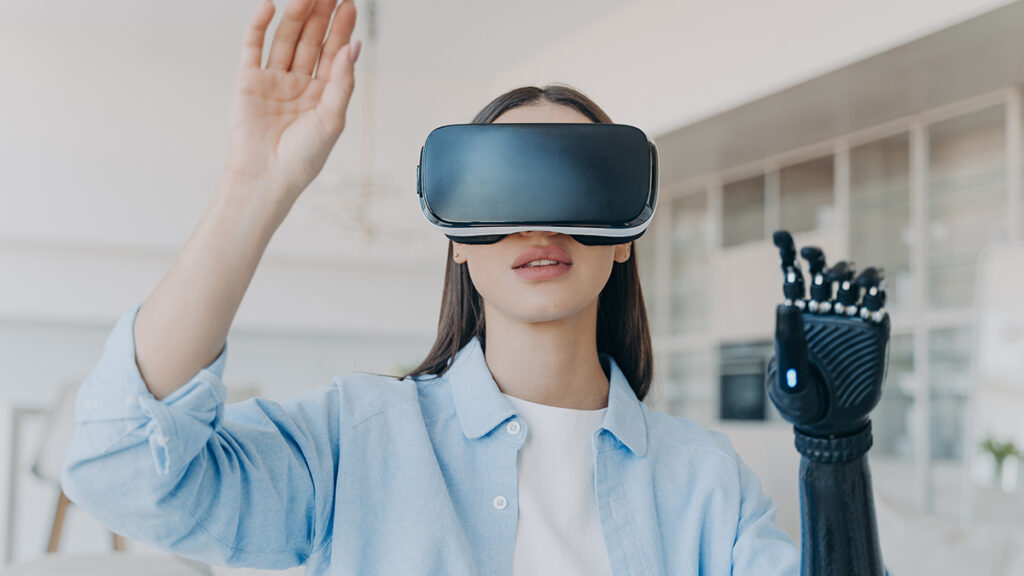
Traditional classroom lectures and static textbook exercises, while foundational, often fail to instill the practical intuition and systems-level thinking required in today’s energy landscape. In this context, augmented reality (AR) and virtual reality (VR)—together referred to as extended reality (XR)—are emerging as transformative pedagogical tools. By pairing immersive environments with interactive, data-driven simulations, AR and VR enable learners to inhabit energy systems rather than simply study them. Students can manipulate parameters in real time, observe system responses, and practice procedures in environments that might otherwise be inaccessible, prohibitively expensive, or hazardous.
The immersive and embodied qualities of XR shorten the gap between abstract models and applied practice. Learners not only see equations and diagrams come to life but also experience how design and operational decisions unfold in complex systems. Early pilots in renewable energy training, building energy modeling, and utility workforce development already show measurable gains in engagement, conceptual understanding, and procedural readiness. These findings are influencing how universities, vocational schools, and corporate training programs design their curricula, preparing the next generation of energy professionals for the realities of a low-carbon future.
Why AR and VR Are Well Suited to Energy Simulation Education
The value of AR and VR in energy education can be distilled into three core affordances: immersion, embodiment, and contextualization.
Immersion provides learners with the perceptual sense of “being there,” enabling them to perceive spatial relationships and dynamic processes at a human scale. Embodiment allows learners to engage physically with simulations, using gestures and movement to operate controls, troubleshoot systems, or probe models. Contextualization situates these simulations in realistic scenarios—whether a virtual substation, a rooftop solar array, or a building’s mechanical room—embedding the experience in environmental and operational constraints that mirror real-world conditions.
Energy systems are inherently multi-dimensional, spanning thermal dynamics, fluid flow, electrical networks, control logic, and human interaction. Traditional teaching methods rely heavily on equations, 2D schematics, and isolated software outputs. XR unifies these domains: students can walk through a 3D digital twin of a building, view overlays of airflow and heat flux, and interact with real-time sensor readings. This multisensory experience supports the development of robust mental models, enabling learners to synthesize relationships that would be difficult to perceive in conventional instruction.
Another unique strength of XR is its ability to simulate rare or hazardous events in a safe environment. Learners can rehearse emergency shutdowns, observe the propagation of faults through a power grid, or explore the impacts of extreme weather on distributed generation. Such scenario-based practice strengthens procedural memory and situational awareness, preparing technicians and operators to respond effectively under pressure.
Core Applications of AR/VR in Energy Simulation Learning
Building Energy Modeling and Thermal Simulation
Building energy modeling (BEM) is one of the most advanced applications of AR and VR in education. Teaching BEM involves helping learners understand how design choices—such as window placement, HVAC systems, or insulation levels—affect dynamic energy use and occupant comfort. XR transforms abstract charts into lived experiences. For example, students can step inside a virtual room and view overlays showing temperature gradients, heat loss at thermal bridges, or the impacts of changing sun angles on glare. Adjusting a parameter like glazing thickness provides instant feedback on thermal comfort and energy load.
Beyond single scenarios, immersive BEM allows students to compare multiple design alternatives experientially. Learners can transition between virtual models to contrast daylighting, acoustic performance, or HVAC behaviors, fostering deeper appreciation for design tradeoffs. Research on VR in building energy education shows significant gains in spatial comprehension and closer alignment between conceptual models and simulation outputs—essential for practitioners who must translate abstract calculations into actionable design decisions.
Renewable Energy Systems and Field-Scale Simulations
Renewable energy education benefits enormously from XR’s ability to represent large spatial systems. Photovoltaic (PV) arrays, wind farms, and battery installations operate across scales that are difficult to experience firsthand in traditional classrooms. In VR, learners can adjust panel tilt, orientation, or spacing while observing real-time impacts on solar output. Advanced digital twin environments allow students to analyze how time of day, seasonal shifts, or environmental factors such as dust and shading affect PV performance.
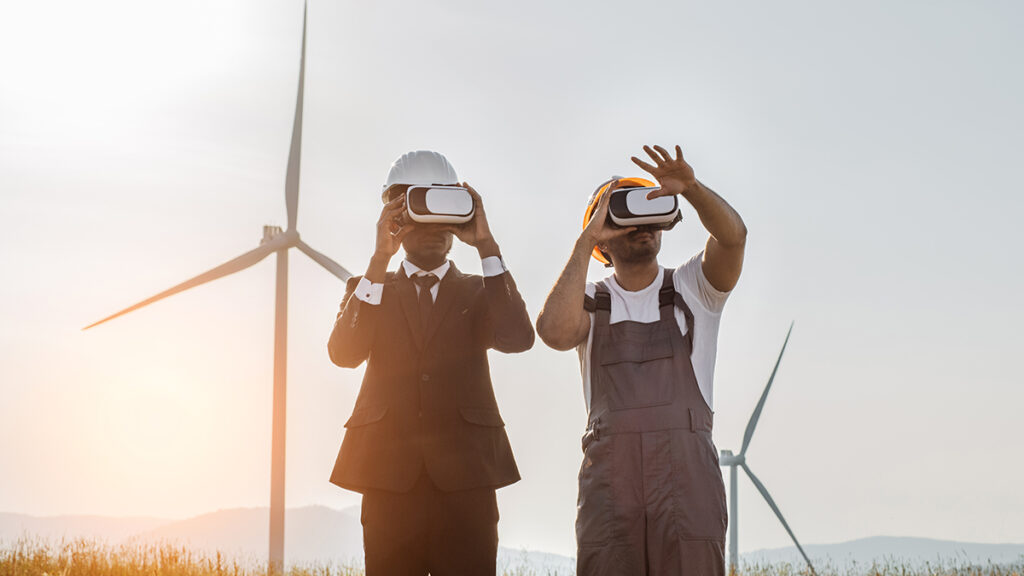
Similarly, wind energy simulations let learners visualize wake effects and turbine spacing, while storage system modules model charge–discharge cycles and grid integration challenges. These virtual labs create hands-on familiarity with concepts that would otherwise require expensive field visits or long-term observation. Projects such as the National Renewable Energy Laboratory’s (NREL) Immersive Digital Twin Laboratory exemplify how VR can replicate utility-scale installations, giving students authentic insights into operational dynamics without leaving the classroom.
Grid Operations, Smart Grids, and Control Room Training
Managing power systems requires a balance of technical expertise and situational judgment. VR-based replicas of substations and control rooms offer safe environments for trainees to practice load management, contingency response, and distributed resource coordination. When paired with AR overlays of live SCADA data or simulated faults, students can diagnose problems, test operational sequences, and observe cascade failures without endangering actual infrastructure.
Collaborations between universities and utilities have demonstrated that VR control room training improves procedural recall and reduces time-to-competency compared to classroom lectures. For future operators, this kind of rehearsal is invaluable in preparing for high-stakes scenarios.
HVAC Systems, Controls, and Maintenance Training
Hands-on practice remains central for HVAC technicians and commissioning engineers. AR can overlay wiring diagrams, step-by-step guides, and sensor diagnostics directly onto real equipment through smart glasses or tablets. This “see-and-do” approach bridges the gap between abstract control logic and physical components. VR complements this by allowing trainees to practice in simulated mechanical rooms before engaging with live systems, minimizing risks and building confidence.
Meta-analyses confirm that VR-based technical training improves both procedural and non-technical skill acquisition. For energy education, this dual approach supports technicians in mastering the systems they will encounter daily in the field.
Pedagogical Design: Making AR/VR Learning Effective
The success of AR and VR in energy education depends not on flashy visuals but on sound instructional design. Learning objectives must be clear and measurable: whether interpreting thermal maps, diagnosing faults, or making design decisions. Simulations should scaffold learning in structured steps—exploration, experimentation, and reflection—while providing timely feedback.
Interactivity is critical. Learners must be able to adjust parameters, conduct “what-if” experiments, and observe causal outcomes. Well-designed dashboards integrated into VR environments encourage hypothesis testing and reinforce scientific reasoning. Equally important is the debriefing process: guided reflection helps learners connect their virtual experiences back to theoretical models and real-world contexts, consolidating knowledge for future application.
Blending XR with conventional tools strengthens learning ecosystems. For example, a student may first simulate a building’s performance in EnergyPlus, then step into the model via VR to evaluate occupant comfort, and finally draft a retrofit strategy. This integration of modeling, visualization, and communication mirrors the workflow of energy professionals.
Case Studies and Early Implementations
Pilot programs highlight the tangible benefits of immersive learning in energy education. Projects like ENERGYSIM developed VR-based escape-room activities where students solved puzzles related to building energy modeling. These gamified environments not only improved engagement but also helped learners visualize complex energy dynamics.
NREL’s Immersive Digital Twin Laboratory provides another model. Here, students analyze virtual solar arrays under varying conditions, connecting theoretical principles to operational performance. Similarly, Virginia Tech has partnered with industry to create VR replicas of substations, preparing utility workers for high-risk procedures in a safe, data-driven environment.
These case studies illustrate how immersive approaches bridge gaps between conceptual learning and professional readiness. By combining authentic datasets with interactive scenarios, such programs prepare learners to navigate the complexities of modern energy systems.
Technologies and Tools Driving XR in Energy Education
The XR ecosystem for energy education combines hardware, software, and data infrastructure. On the hardware side, immersive headsets, haptic devices, AR glasses, and spatial audio systems provide multisensory engagement. Software development relies heavily on game engines like Unity and Unreal, alongside digital twin frameworks that integrate real sensor data or simulation outputs.
Interoperability with standard modeling tools such as EnergyPlus, OpenStudio, and BIM platforms ensures authenticity. Digital twins serve as the backbone, offering dynamic, time-varying simulations that can be paused, accelerated, or replayed for instructional purposes. Cloud streaming and multiplayer networking extend these experiences to collaborative classrooms, where geographically dispersed students share a common virtual lab.
Telemetry from XR sessions—such as task sequences, time spent, or error rates—provides instructors with detailed insights for assessment and continuous improvement. These analytics enable data-informed refinement of both content and pedagogy.
Challenges and Considerations in Implementation
Despite their promise, AR and VR face several challenges in energy education. High hardware costs and maintenance remain barriers, particularly for institutions with limited budgets. Equity is another concern: learners without access to personal devices or with accessibility needs must not be left behind.
Content creation is resource-intensive, requiring collaboration between subject matter experts, XR developers, and instructional designers. Technical hurdles, such as integrating computationally demanding energy models into real-time simulations, often necessitate surrogate models or cloud rendering. Poorly optimized environments can cause lag or discomfort, undermining the learning experience.
To overcome these issues, many programs begin with targeted pilots focused on specific objectives before scaling. Partnerships with national laboratories and industry can provide access to datasets and infrastructure, while modular, open-source development reduces costs. Establishing clear governance for content maintenance, hardware lifecycles, and assessment ensures sustainability.
Assessing Learning Impact
Evaluating the effectiveness of AR and VR is essential for long-term adoption. Outcomes can be grouped into three categories: cognitive gains (knowledge acquisition measured by pre- and post-tests), behavioral improvements (procedural accuracy, error reduction, or faster task performance), and affective outcomes (increased confidence, motivation, or engagement).
Studies consistently show that immersive training enhances procedural performance and retention, especially when paired with deliberate feedback and structured debriefing. In the energy sector, assessment should focus on whether learners can interpret model outputs, diagnose faults, and communicate tradeoffs effectively.
Analytics from XR sessions provide rich data for instructors, capturing decision paths, time spent, and mistakes made. When combined with traditional assessments and workplace performance metrics, these insights paint a comprehensive picture of impact. Early adopters report reduced onboarding times, lower field error rates, and greater preparedness for rare but critical events when immersive simulations are integrated into training.
The Future of AR/VR in Energy Simulation Education
Looking ahead, three converging trends will shape the role of XR in energy education. First, digital twins and sensor networks will provide increasingly rich real-time datasets, grounding immersive simulations in operational realities. Second, artificial intelligence will personalize XR learning, with intelligent tutors guiding learners, generating adaptive scenarios, and using surrogate models to reduce computational demands. Third, hybrid learning ecosystems will become standard, blending lectures, computational modeling, immersive labs, and workplace apprenticeships.
Policy frameworks must also evolve to formally recognize XR-based learning, such as counting virtual lab hours toward professional training requirements. As devices become more affordable and cloud-based streaming reduces hardware barriers, immersive education will extend beyond elite universities to community colleges and vocational programs. With careful design and governance, AR and VR can equip a diverse, global workforce to design, operate, and maintain resilient, low-carbon energy systems.
Conclusion
AR and VR offer a powerful set of tools for transforming energy simulation education. By enabling learners to inhabit complex systems, manipulate dynamic variables safely, and rehearse critical procedures, XR bridges the gap between theoretical models and professional practice. When grounded in solid instructional design and supported by realistic datasets, immersive learning builds the spatial reasoning, systems thinking, and procedural fluency required by today’s energy professionals.
Early pilots in building energy modeling, renewable simulations, and utility training demonstrate promising outcomes, though challenges remain around cost, content creation, integration, and equitable access. For educators and training leaders, the most effective path forward is iterative: start with focused pilots, assess outcomes rigorously, and scale through partnerships and modular strategies.
The potential payoff is substantial. A workforce trained not only to analyze equations but to feel, explore, and act within energy systems is one better equipped to meet the challenges of a rapidly changing sector. In the coming years, AR and VR will not merely supplement energy education—they will redefine it, shaping how professionals learn to power sustainable societies.