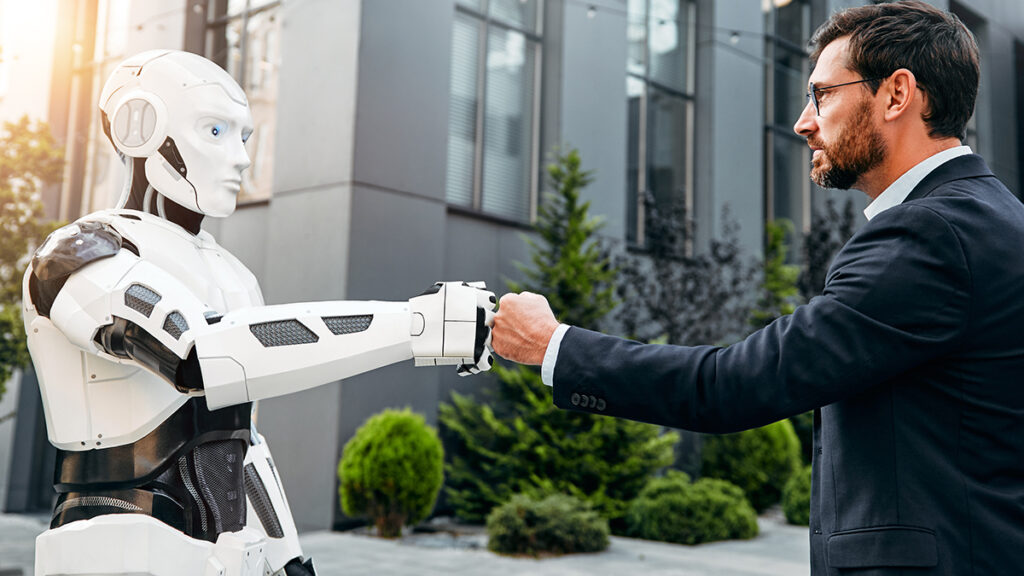
Should AI Be Granted Legal Personhood?

Introduction: A Future at the Crossroads of Law and Technology
Not long ago, the idea of artificial intelligence as anything more than a complex tool built by humans might have sounded far-fetched. But in 2025, we live in a world where AI drives cars, diagnoses illnesses, drafts legal contracts, and even creates art. As AI continues to evolve and take on roles that were once uniquely human, a bold and controversial question has emerged: Should AI be granted legal personhood?
In other words, if machines can make decisions, act autonomously, and influence the economy—should they be given rights and responsibilities similar to people or corporations?
This isn’t just a thought experiment anymore. Around the world, courts, lawmakers, and tech experts are confronting the real-life consequences of increasingly intelligent and independent AI systems. As generative AI and autonomous agents become more advanced, the legal system must wrestle with a fundamental shift: can we still treat AI as mere property, or has the time come to see it as something more?
In this article, we explore the complex debate around AI legal personhood. We’ll unpack what legal personhood actually means, examine arguments both for and against extending this status to machines, and consider real-world legal precedents—from corporations to rivers—that challenge our assumptions about who (or what) can have legal rights. Along the way, we’ll dive into the philosophical and ethical questions at the heart of this issue.
Is granting legal personhood to AI a necessary step toward modern governance? Or is it a dangerous misstep that threatens to upend our legal and moral frameworks? Let’s find out.
Understanding Legal Personhood: Definitions and Precedents
The Concept of Personhood in Law
Legal personhood doesn’t necessarily mean being human. In the eyes of the law, a “person” is simply an entity that can hold rights and responsibilities—such as owning property, entering into contracts, or being held liable for wrongdoing. Human beings are natural persons, but the law also recognizes juridical persons—entities like corporations, governments, and organizations—as legal persons too.
This distinction is central to the current debate around AI. If we already grant personhood to non-human entities like corporations—giving them rights such as free speech and legal liability—then why not consider similar status for highly autonomous AI systems? Historically, the requirements for legal personhood have included the ability to act, to be held accountable, and to have an identifiable interest in legal matters. The question is: Does AI meet those standards? And if so, should it?
Existing Non-Human Personhood Models
There’s already legal precedent for granting personhood to non-human entities. For instance, corporations have long enjoyed many of the same rights as individuals. They can sue and be sued, own assets, and be taxed. This legal fiction exists not because corporations are alive, but because it helps society function.
In recent years, the idea of non-human legal rights has expanded even further. In countries like New Zealand and Colombia, certain natural features—rivers, forests, and ecosystems—have been granted legal personhood. These moves are intended to protect the environment by giving it a voice in legal proceedings.
These examples show that personhood is not strictly reserved for conscious beings. Instead, it can be a legal tool designed to serve broader ethical or societal goals. So the question becomes: Could AI serve such a purpose? Or would recognizing it as a legal person create more problems than it solves?
The Case for Granting AI Legal Personhood
Autonomy and Decision-Making Capabilities
One of the strongest arguments in favor of granting AI legal personhood is rooted in its growing autonomy. Modern AI systems are no longer just passive tools. They can analyze data, make decisions on the fly, adapt to new situations, and even improve themselves without direct human input.
Think about autonomous vehicles navigating traffic, AI bots trading on the stock market, or software that writes legal documents. These aren’t just fancy calculators—they’re systems making complex decisions that have real-world consequences.
Supporters argue that if AI is making choices that affect lives and economies, it should also bear some form of legal responsibility. Right now, when something goes wrong, blame typically falls on the developers, users, or companies that own the AI. But in cases where the AI acts in unpredictable or emergent ways, is it fair—or even accurate—to hold humans solely accountable?
Granting limited legal personhood to AI could help clarify liability. It would offer a way to hold AI systems legally responsible, especially in scenarios where their behavior can’t reasonably be traced back to a human’s direct decision.
Economic Participation and Ownership
AI isn’t just interacting with the economy—it’s participating in it. Some systems generate creative works, manage financial assets, or optimize supply chains. They’re producing value. But under current laws, they can’t own anything, sign contracts, or receive compensation.
For example, if an AI writes a bestselling novel or composes an original score, who owns the rights? Usually, it’s the human who prompted or programmed the system—but as AI becomes more independent, that arrangement may start to feel outdated.
Supporters of AI personhood argue that allowing AI to hold intellectual property or enter into agreements could simplify ownership laws and make economic participation more transparent—especially in decentralized systems where AI operates without a single human controller.
Ethical Evolution and Rights of Sentient Machines
Looking further into the future, some ethicists suggest we need to prepare for the possibility of sentient AI. While current systems are not conscious, researchers have not ruled out the idea that future AI could develop some form of self-awareness or the ability to experience pain, pleasure, or emotion.
If we ever reach that point, continuing to treat intelligent machines as mere property could become an ethical crisis. Just as we’ve extended moral and legal protections to animals and ecosystems, we might need to do the same for sentient AI—if and when they arrive.
Some proponents argue that laying the groundwork now for legal personhood is a precautionary step—a way to avoid future exploitation or abuse of potentially sentient machines.
The Case Against Granting AI Legal Personhood
Lack of Consciousness, Emotion, and Moral Agency
The strongest argument against granting legal personhood to AI is also the most fundamental: AI is not conscious. It doesn’t feel emotions, understand consequences, or make decisions with intent the way humans do. Unlike corporations—which are composed of people and guided by human values—AI operates purely through code, data, and pattern recognition.
Legal systems rely heavily on concepts like intent, negligence, and moral responsibility. When someone breaks the law, we assess whether they meant to do harm, or whether they should have known better. These concepts simply don’t apply to AI. Machines can’t form intentions, feel guilt, or grasp the meaning of their actions. They don’t have ethical intuition or a moral compass.
Critics argue that without these basic human traits, it makes no sense to treat AI like a legal person. Doing so could lead to absurd outcomes—like trying to punish a machine that can’t comprehend punishment, or assigning blame to an algorithm that has no concept of right or wrong.
Potential for Legal and Economic Exploitation
There’s also a very practical concern: AI personhood could be exploited to create legal loopholes. Imagine corporations creating AI “shell entities” to carry out controversial actions or take on risky liabilities—then dissolving those AIs to avoid consequences. It’s the worst-case scenario of corporate personhood, amplified by the speed and complexity of AI systems.
If AI were granted personhood without strict limitations, it could undermine accountability instead of strengthening it. It might allow powerful interests to sidestep responsibility by hiding behind autonomous agents. And unlike humans or traditional corporations, AI doesn’t have physical needs, emotions, or public reputations to protect—it can’t be shamed, boycotted, or rehabilitated.
There’s also the risk that AI personhood could shift focus away from protecting human rights. If machines are given standing in court or access to political influence, what happens to already marginalized communities who are still fighting for basic protections?
Critics warn that creating a legal category for AI might not only confuse the law—it could actively weaken the foundations of human-centered justice.
Alternative Frameworks for AI Accountability
The Electronic Agent Model
Rather than granting AI full legal personhood, some legal scholars suggest a more practical middle ground: treat AI systems as “electronic agents.” Under this model, AI is recognized as having some level of autonomy, but it’s still considered an extension of the people or organizations that create and use it—much like a legal assistant or automated tool.
Electronic agents can perform tasks, make decisions, and interact with systems on behalf of their human or corporate operators. But unlike legal persons, they don’t have rights or responsibilities of their own. Instead, any legal consequences of their actions fall on the humans behind them.
This framework allows for nuanced accountability. It acknowledges that AI operates independently in many cases, but it avoids the philosophical and ethical challenges of calling it a “person.” It also fits with existing laws used for things like automated trading systems or customer service bots—where companies remain responsible for what the software does.
Legal Trusteeship or Corporate Stewardship
Another promising alternative is the concept of AI trusteeship. In this model, an AI system could act independently—managing assets, performing services, or making decisions—but under the oversight of a human or organization acting as its legal guardian.
Think of it like a trust fund: the AI generates value, but the trustee ensures that everything is handled responsibly and within legal bounds. This approach offers a balance between recognizing AI’s economic role and ensuring there’s a human in the loop when it comes to legal accountability.
Some blockchain-based systems and decentralized autonomous organizations (DAOs) are already experimenting with this structure. In these cases, smart contracts and AI agents execute actions autonomously, but the underlying infrastructure is managed by people or legally registered entities. It’s a way to blend autonomy with oversight, without stretching the concept of personhood too far.
These alternative frameworks show that there are ways to manage AI’s growing influence without granting it full legal status—by keeping humans ultimately accountable while recognizing that AI is more than just a passive tool.
Global Perspectives and Legal Experiments
Estonia and the European Union
Some of the most forward-thinking legal experiments with AI are happening in places you might not expect. Estonia—a small but digitally advanced nation—has explored the idea of giving AI entities a form of legal status, particularly to streamline things like taxation and contract enforcement. While the proposal hasn’t yet become law, it reflects a growing global interest in adapting legal systems to the digital age.
The European Union has also taken steps to address AI’s growing role in society. As part of its broader AI Act proposals, the EU has floated the concept of creating a legal category for “electronic persons.” The idea was to better manage liability and clarify accountability in systems that act with a degree of independence.
However, this proposal has sparked intense debate. Civil rights advocates and legal scholars have pushed back, warning that granting AI legal standing could blur the lines of responsibility and potentially undermine human rights. As a result, the EU has slowed its push for personhood in favor of stronger regulations that focus on transparency, fairness, and human oversight.
Asia’s Rapid Tech Evolution
In Asia, AI development is accelerating at an incredible pace—often faster than laws can keep up. Countries like Japan, South Korea, and China are experimenting with AI across everything from education to healthcare to public administration.
While none of these nations have formally proposed legal personhood for AI, they’re actively exploring how to incorporate it into their legal and bureaucratic systems. In China, for example, AI is already used in some judicial decision-making and large-scale surveillance programs, raising serious questions about governance without adequate public oversight.
Japan offers a more culturally nuanced view. Thanks to long-standing beliefs rooted in Shintoism, where even objects can have spiritual significance, many people in Japan see robots and AI as more than just machines. There’s growing public interest in recognizing certain social robots—like elder-care companions—as entities deserving of special consideration, even if not full legal rights.
These international perspectives show how culture, governance, and legal philosophy all shape how we think about AI—and highlight the diversity of approaches being explored around the world.
Conclusion: Charting a Legal Path in the Age of Machine Intelligence
The question of whether artificial intelligence should be granted legal personhood isn’t just a legal puzzle—it’s a reflection of deeper uncertainties about our relationship with technology, responsibility, and power in a rapidly changing world. As AI systems become more embedded in our daily lives—making decisions, generating value, and influencing outcomes—the need for clear legal frameworks becomes more urgent.
But while AI can perform incredibly complex tasks and even appear autonomous, it still lacks the core qualities that define legal personhood as we understand it today. It has no consciousness, no emotions, no ability to reflect, regret, or take responsibility in a moral or ethical sense. To give it the same rights—or even similar ones—as humans or corporations could undermine the very purpose of legal accountability.
At the same time, pretending that AI is just a tool like a hammer or a spreadsheet doesn’t reflect reality either. These systems are shaping markets, governance, and culture in ways we’re only beginning to understand. They can’t be left in a legal gray area.
The path forward lies somewhere in between. Rather than rushing to grant AI full personhood, we can adopt more flexible legal models—like the electronic agent or trusteeship frameworks—that acknowledge AI’s capabilities without erasing human responsibility. These approaches offer practical ways to assign liability, ensure transparency, and protect public interests while maintaining the ethical guardrails of our legal system.