Using generative AI in computing education

Introduction
Over the past few years, generative AI has moved from being an experimental technology in research labs to a mainstream force that is shaping how we write, design, code, and even conceptualize creativity. Its influence is visible across industries, but nowhere is its impact more transformative than in education—and particularly in computing education. Generative AI is not merely automating tasks; it is changing how learners interact with technology, opening new opportunities for exploration, understanding, and collaboration.
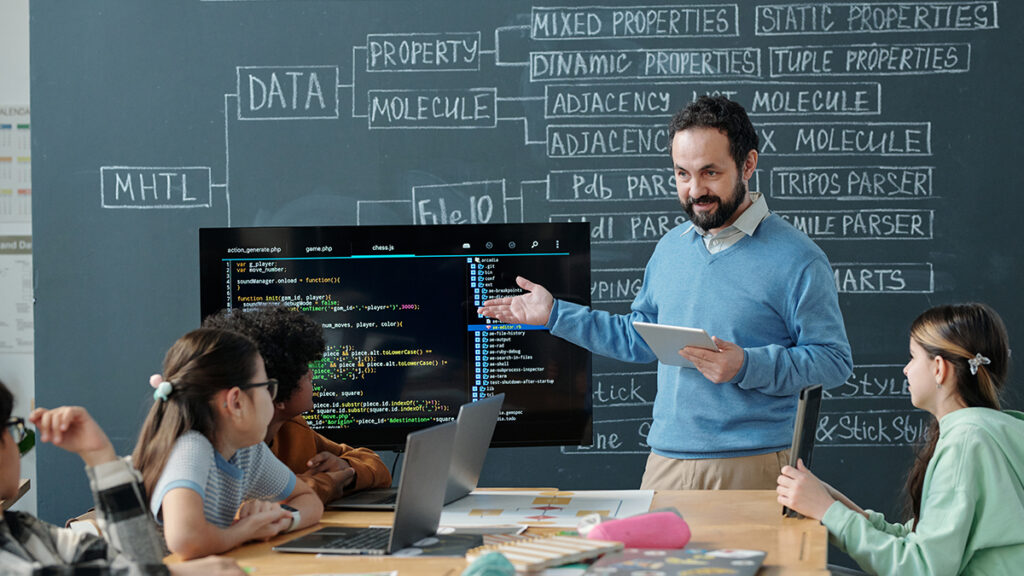
In computing classrooms, generative AI is already being used to produce code snippets on demand, explain abstract principles in conversational form, and help students approach problem-solving from fresh perspectives. As the digital economy evolves, students must not only learn to code but also understand how to work alongside intelligent systems. In this sense, generative AI acts as both a powerful tool for learning and a subject of study in its own right.
For educators, the challenge lies in moving beyond superficial integration. It is not enough to simply provide access to AI tools. Instead, the goal is to embed generative AI meaningfully into curricula, using it to foster critical thinking, collaborative problem-solving, and technical fluency. For students, the opportunity is twofold: to master computing skills while also developing the literacy required to understand and critique the systems they are using. Together, these dynamics position generative AI at the center of the next phase of computing education.
The Rise of Generative AI in Education
From Automation to Co-Creation
Early applications of AI in education focused primarily on automation. Tools were developed to grade assignments, check for plagiarism, or recommend resources. These systems were useful but limited, operating as behind-the-scenes assistants rather than active collaborators.
Generative AI represents a paradigm shift. Rather than simply analyzing data, it creates new artifacts—whether code, text, simulations, or design prototypes—based on user prompts. This transformation redefines the relationship between learners and technology. Instead of passively consuming content, students engage in co-creation with AI.
For example, a programming student struggling with recursion can now interact with an AI to generate examples, request detailed annotations, and explore multiple variations of the same concept. The process is no longer linear. It becomes dialogic and exploratory, allowing learners to test ideas in real time while refining their understanding through iterative feedback.
Generative AI as Both Subject and Tool
One of the most distinctive aspects of generative AI in computing education is its dual role. On one hand, it is a subject that must be studied—students need to learn about the underlying architectures such as large language models, diffusion models, and transformers. On the other hand, it is a practical tool that can be used to accelerate learning, debug code, or prototype new ideas.
This recursive relationship fosters curiosity. By using generative AI as a learning assistant, students naturally begin to ask deeper questions about how the system works, what biases it may contain, and where its limitations lie. This combination of practical utility and conceptual inquiry makes generative AI uniquely valuable in computing education.
Applications of Generative AI in Computing Education
AI as a Coding Companion
The most visible role of generative AI in computing classrooms is as a coding assistant. Tools like GitHub Copilot, ChatGPT, and other language model–based platforms can generate working code from natural language descriptions, recommend optimizations, and even explain snippets line by line.
In practice, this means students have access to a real-time tutor. Instead of getting stuck on syntax errors for hours, learners can request clarifications, ask why a particular loop is inefficient, or explore multiple implementations of the same algorithm. This allows them to focus on higher-order problem-solving rather than getting bogged down in technical minutiae.
Personalized Learning Through Adaptive Feedback
One of the greatest challenges in computing education is the wide variation in student ability. Some learners progress quickly, while others struggle with foundational concepts. Generative AI addresses this by offering personalized pathways.
Unlike traditional learning management systems, which rely on static problem banks, AI can generate endless variations of coding problems, gradually increasing complexity as learners advance. Beginners may receive simple, annotated examples, while advanced students are challenged with optimization tasks or open-ended projects. This adaptability ensures that students are continuously supported while being appropriately challenged.
Visualization of Abstract Concepts
Computer science is filled with abstract principles—data structures, algorithms, operating systems—that can be difficult to grasp through text alone. Generative AI can transform these abstractions into dynamic visualizations.
For instance, a student learning about sorting algorithms could watch an AI-generated animation of quicksort in action, complete with step-by-step commentary. Similarly, concepts like memory allocation or neural network training can be represented through interactive diagrams, helping learners build stronger mental models.
Collaboration and Peer Simulation
Generative AI also enables new forms of collaboration. In group projects, AI can act as a simulated peer, offering feedback, generating alternative solutions, or filling in for absent team members. This creates a collaborative dynamic where AI is treated as a contributor rather than a passive tool.
Such interactions encourage critical thinking. When students evaluate whether an AI-generated solution is correct, efficient, or secure, they are practicing the skills that professional developers rely on. In this sense, AI becomes less of an authority figure and more of a provocateur, pushing students to refine their reasoning and defend their design choices.
Benefits of Generative AI in Computing Education
Lowering Barriers to Entry
For many beginners, programming feels intimidating. Syntax errors, debugging challenges, and complex problem decomposition can create frustration that leads to disengagement. Generative AI helps lower these barriers by providing immediate assistance and clear examples, building learner confidence.
This accessibility is particularly significant for underrepresented groups in computing. By reducing early-stage frustration, generative AI has the potential to broaden participation in the field, making programming more inclusive and diverse.
Enhancing Creativity and Innovation
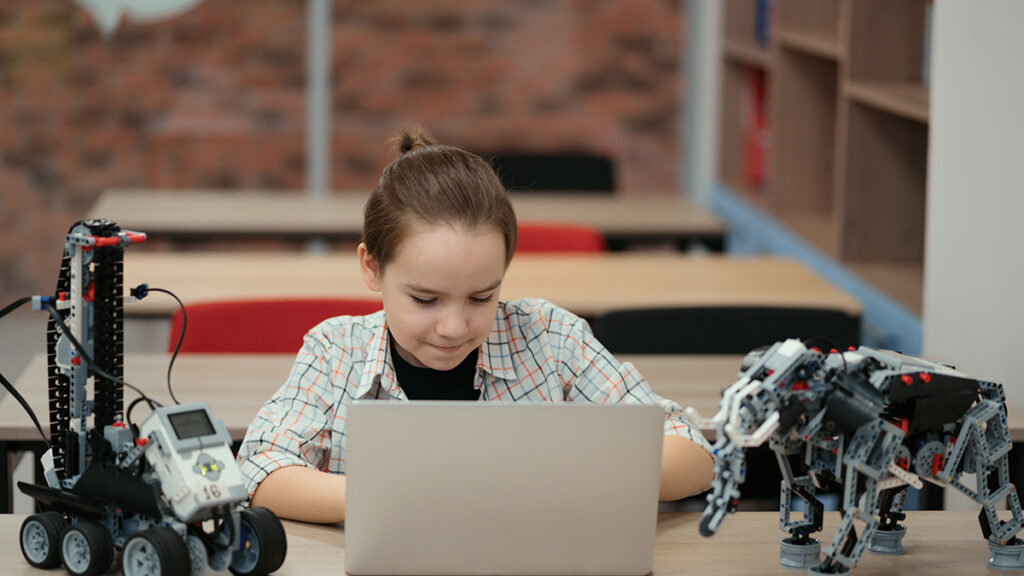
Generative AI empowers learners to think beyond standard exercises and pursue creative applications. Students can prototype games, design interactive applications, or experiment with AI-driven art without being constrained by technical hurdles. The ability to quickly generate prototypes fosters a culture of innovation, where computing is seen not just as a technical skill set but also as a creative medium.
This mirrors professional industry practices, where rapid ideation and iteration are essential. By giving students access to similar tools, education aligns more closely with the realities of modern technology careers.
Supporting Educators
Educators also benefit significantly from generative AI. Teachers often struggle to balance individualized attention with large class sizes. AI can help by automating routine tasks such as generating practice problems, creating tailored examples, or providing first-line feedback on assignments.
This frees instructors to focus on higher-level teaching tasks, such as mentoring, facilitating discussions, or designing complex projects. Additionally, AI-driven analytics allow educators to identify patterns across student work, revealing common misconceptions and enabling timely interventions.
Challenges and Risks
The Risk of Over-Reliance
One major concern is that students may become overly dependent on generative AI. If learners simply copy and paste AI-generated code without analyzing it, they risk developing superficial skills that will not prepare them for professional practice.
To counter this, curricula must be designed to encourage active engagement with AI outputs. Assignments should require students to critique, improve, or explain generated code, ensuring that deep learning occurs alongside tool use.
Accuracy and Reliability Issues
Generative AI is powerful but far from perfect. It can produce incorrect, inefficient, or insecure code, which can mislead students. This presents a challenge but also an opportunity. By analyzing both accurate and flawed outputs, students can sharpen their evaluation, testing, and debugging skills—competencies that are central to computing.
Ethical and Equity Considerations
The rise of generative AI raises critical ethical questions. Issues of plagiarism, authorship, and intellectual honesty must be addressed explicitly in computing classrooms. Institutions need clear guidelines that define acceptable uses of AI and emphasize academic integrity.
Equity is also a concern. Not all students have access to the latest AI-powered tools, which can create disparities in learning outcomes. Ensuring that these resources are affordable and accessible will be essential for avoiding new forms of exclusion.
Generative AI as a Catalyst for Curriculum Redesign
Embedding AI Literacy
To fully harness the potential of generative AI, computing curricula must incorporate AI literacy as a core component. Students need to understand how generative models are built, what biases they may carry, and what limitations they face. This empowers learners to use AI responsibly and critically.
Courses could include modules on natural language processing, ethical considerations in AI, and labs where students experiment with fine-tuning smaller models. This dual emphasis—on using AI effectively and understanding its mechanics—prepares students to be both skilled practitioners and informed critics.
Assessment in the Age of Generative AI
Traditional assessments are increasingly insufficient in the era of generative AI. Take-home assignments or static exams can be easily completed with AI assistance. To maintain rigor, assessments must evolve.
Live coding sessions, oral defenses, and projects requiring students to integrate AI-generated work with their own will likely become more common. These methods ensure that educators can evaluate true comprehension and creativity, rather than simply checking for correct outputs.
The Future of Generative AI in Computing Education
Integration with Immersive Technologies
The future of computing education will likely see generative AI integrated with immersive tools like augmented reality (AR) and virtual reality (VR). Imagine a 3D classroom where students manipulate data structures visually, with generative AI constructing dynamic models that adapt to their actions. This convergence of technologies will make computing education more interactive and engaging than ever.
Lifelong Learning and Professional Development
Generative AI is not just transforming formal education but also reshaping professional development. For software engineers, data scientists, and IT specialists, AI-driven platforms provide continuous opportunities to upskill. By embedding generative AI into lifelong learning pathways, institutions can ensure that workers remain adaptable in industries where technologies evolve at breakneck speed.
Building a Culture of Human-AI Collaboration
Ultimately, the long-term goal is to foster a culture where humans and AI collaborate seamlessly. Generative AI should not replace the process of human learning but should amplify it. Computing education must focus on developing higher-order skills—designing, critiquing, and orchestrating intelligent systems—that reflect the realities of modern technology professions.
Conclusion
The integration of generative AI into computing education marks a profound shift in how we teach, learn, and conceptualize technology. As a coding assistant, visualization tool, adaptive tutor, and collaborative partner, generative AI enhances accessibility, creativity, and engagement in ways that traditional methods cannot. At the same time, it presents challenges that educators must address carefully, from the risk of over-reliance to concerns about ethics, equity, and accuracy.
What makes generative AI unique is its dual role—it is both a tool that students can use and a subject that they must study. Classrooms that embrace this dual perspective will produce not only competent coders but also critical thinkers who understand the power and limitations of AI.
The ultimate aim is not to produce graduates who simply know how to prompt AI tools. It is to cultivate innovators and problem-solvers who can responsibly integrate AI into their work while maintaining human creativity and judgment. By doing so, computing education can position itself at the forefront of shaping the future of human-AI collaboration, ensuring that technology continues to serve as a partner in learning, creativity, and progress.