Will AI Make Certain Careers Obsolete by 2030?

Introduction: The Unstoppable Rise of AI in the Workplace
As we journey further into the digital age, artificial intelligence (AI) has evolved from a futuristic notion into a transformative force reshaping nearly every industry. From predictive algorithms in finance to virtual customer service agents and autonomous systems in logistics, AI is now deeply embedded in the core operations of businesses across the globe. But as machine learning, natural language processing, and robotics continue to advance, a key question looms larger than ever: Will AI render certain careers obsolete by 2030?
This question is not merely speculative. It strikes at the heart of modern workforce concerns. Workers, business leaders, students, and policymakers are all grappling with the implications of AI’s rapid integration. While some see AI as a disruptor that will replace human labor across a wide swath of industries, others believe it will augment human abilities and create entirely new categories of work.
In this article, we’ll explore the current impact of AI on jobs, identify roles most vulnerable to automation, highlight careers likely to evolve rather than disappear, and outline how individuals can proactively adapt in a world where AI plays a central role.
The Current Landscape: How AI is Already Changing Jobs
From Automation to Intelligence
Automation has been streamlining human labor for decades, from assembly lines in manufacturing to software bots in finance and logistics. But where traditional automation relied on predefined rules, AI introduces cognitive intelligence—the ability to learn, interpret data, and make decisions.
In healthcare, AI now assists with diagnostic imaging, interpreting scans faster and often more accurately than radiologists. In law, contract analysis and document review are increasingly powered by AI. In finance, algorithms execute trades based on real-time market data in fractions of a second.
These are not just time-saving tools—they’re systems replacing human judgment in white-collar roles previously considered untouchable by automation.
Workforce Displacement vs. Transformation
A 2023 McKinsey & Company report estimates that up to 30% of work hours in the U.S. could be automated by 2030. This is particularly true for roles in data entry, customer service, and logistics. But the same report also highlights the emergence of millions of new jobs in technology, green energy, AI ethics, and healthcare.
AI is both destructive and generative: it displaces certain types of work while simultaneously creating opportunities in fields that didn’t exist just a decade ago. The key is transition and adaptation.
Sectors and Roles Most Vulnerable to AI Displacement
Administrative and Clerical Jobs
Routine administrative tasks—data entry, scheduling, and payroll—are highly susceptible to AI. Intelligent virtual assistants can now manage emails, organize calendars, and respond to routine queries far more efficiently than a human administrator.
Retail and Customer Service
Retail environments have already begun embracing automation, from self-checkout kiosks to AI-driven chatbots that handle customer inquiries. Large e-commerce platforms increasingly rely on AI for inventory management, fraud detection, and customer support—reducing the need for large support teams.
Transportation and Delivery
Self-driving technologies developed by companies like Tesla and Waymo threaten to transform logistics. Although full-scale deployment of autonomous vehicles is still hindered by regulation and public trust, the long-haul trucking and delivery sectors are widely seen as being among the most at-risk.
Manufacturing and Warehousing
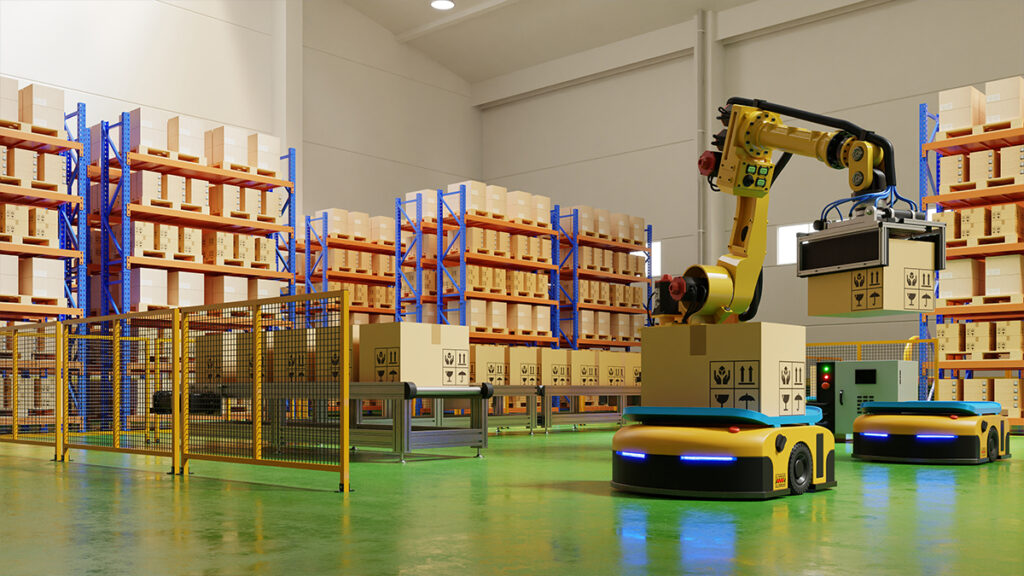
Industrial robots have been used for decades, but AI is enabling a new level of sophistication—machines that can conduct quality control, manage predictive maintenance, and optimize warehouse logistics with minimal human input. Amazon’s fulfillment centers offer a glimpse into this AI-augmented future.
Jobs Likely to Evolve, Not Disappear
Healthcare and Human Services
Despite the rise of AI in diagnostics and robotics, healthcare professions anchored in human empathy—such as nurses, caregivers, and therapists—are irreplaceable. These roles will evolve as professionals learn to interpret and work alongside AI systems, rather than compete with them.
Education and Training
AI-powered tutoring tools and automated grading systems may lighten the load for teachers, but they can’t replace the mentorship, inspiration, and emotional intelligence educators provide. Future educators will need to blend pedagogical skill with digital fluency to remain effective.
Creative Professions
While AI can now generate text, music, images, and even video, creativity is more than just pattern recognition. True artistry stems from human experience, emotional depth, and cultural understanding. Writers, designers, and artists will increasingly collaborate with AI to enhance their creative workflows—but not be replaced by them.
Skilled Trades and Field Work
Electricians, plumbers, mechanics, and technicians perform physical, variable tasks that require dexterity, on-the-spot decision-making, and nuanced troubleshooting. These roles are highly resistant to automation, especially in unpredictable real-world environments.
Emerging Careers Created by AI
AI Ethics and Governance
As AI systems become more powerful, oversight becomes crucial. Specialists in algorithmic fairness, AI safety, and digital governance are already in demand across governments, NGOs, and tech companies to ensure that AI development aligns with human rights and societal norms.
Prompt Engineers and AI Trainers
With the rise of LLMs, crafting effective inputs—or “prompts”—to guide AI behavior is becoming an essential skill. Similarly, AI trainers are needed to label data, provide feedback, and fine-tune models based on real-world performance.
Cybersecurity Analysts
AI not only creates new vulnerabilities but also strengthens defenses. Experts who understand both AI systems and cybersecurity will be crucial in protecting organizations from sophisticated digital threats.
Human-AI Workflow Designers
Designing intuitive systems where humans and AI collaborate seamlessly is becoming a niche field. These professionals bridge psychology, user experience, and machine capability to build AI interfaces that feel natural and efficient.
The Human Element: Skills That AI Can’t Replace
Emotional Intelligence and Empathy
While machines can simulate emotion, they cannot genuinely feel it. Careers in leadership, therapy, negotiation, and diplomacy rely on emotional intelligence—something deeply human and non-transferable to AI.
Critical Thinking and Moral Judgment
AI can process facts, but it cannot weigh values. Ethical dilemmas, cultural context, and long-term consequences are areas where human reasoning still reigns supreme.
Innovation and Vision
AI excels at improving existing systems, but it does not invent new paradigms. The ability to imagine, create, and redefine industries is what will continue to differentiate humans from machines.
Preparing for an AI-Dominated Workforce
Upskilling and Reskilling
Lifelong learning is no longer optional. Professionals must develop digital fluency, analytical thinking, and cross-disciplinary knowledge to stay competitive. Online courses, micro-degrees, and certifications now make upskilling more accessible than ever.
Embracing a Growth Mindset
Flexibility, curiosity, and a willingness to adapt will be key traits in navigating the shifting job landscape. Those who believe they can evolve—regardless of age or background—will thrive.
Policy and Education Reform
Governments must act to future-proof the workforce. This includes reimagining education systems to prioritize soft skills, tech fluency, and adaptability from an early age. Safety nets and support programs will also be essential for displaced workers.
Conclusion: AI Is Not the End, but a New Beginning
The question isn’t whether AI will replace certain jobs by 2030—it’s how society will respond to this shift. Yes, automation will displace specific roles. But, like the steam engine and the internet before it, AI is as much a creator as it is a disruptor.
The future of work will be shaped by human-AI collaboration. By embracing our most human qualities—empathy, creativity, ethics—we can build careers that not only coexist with AI but are amplified by it.
This decade presents an opportunity: to reskill, to rethink, and to redefine what work means in the age of intelligent machines. Those who lean into this change will not just survive—they’ll lead. The future isn’t man or machine. It’s man with machine. And that future begins now.