Will AI Discover New Laws of Physics?

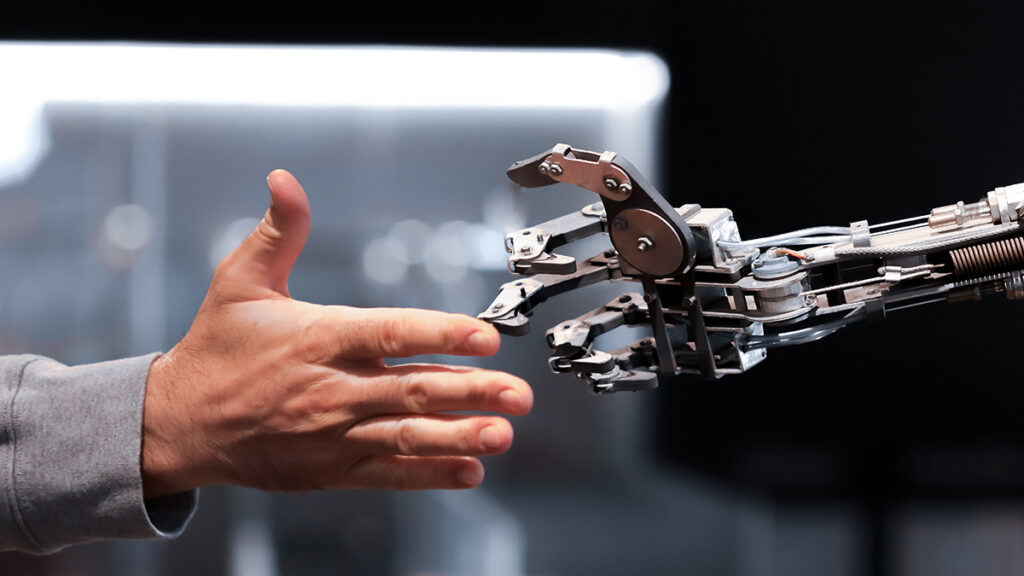
The relationship between artificial intelligence and scientific discovery is entering a transformative new era. AI is no longer confined to optimizing logistics, playing games, or powering virtual assistants—it is now parsing vast datasets, detecting hidden patterns, and generating novel hypotheses. This shift raises an audacious question that goes to the heart of human curiosity: could artificial intelligence one day uncover entirely new laws of physics?
Physics is the foundation of our understanding of the universe. From the smallest subatomic particles to the largest cosmic structures, physical laws dictate how reality behaves. These principles have traditionally been revealed through a blend of human observation, experimentation, and mathematical ingenuity. But as the complexity of data and phenomena grows, even the most brilliant human minds struggle to keep pace.
With its unparalleled capacity for pattern recognition, cross-domain analysis, and sheer computational speed, AI could become a new kind of scientific thinker—not one that mirrors the human mind, but one that expands its reach. This article explores how AI might discover new physical laws, the challenges it would face, and the profound implications such breakthroughs would have for science, philosophy, and our future understanding of reality.
Understanding the Laws of Physics
To consider AI’s potential in this realm, we must first understand what we mean by laws of physics. At their core, these laws are concise, often mathematical, descriptions of the universe’s behavior. They emerge from repeated observation and experimentation, distilled into principles that can reliably predict future outcomes.
Newton’s laws of motion, Maxwell’s equations, and Einstein’s theory of relativity are classic examples. They give us the ability to launch satellites, model planetary motion, understand the properties of light, and describe the shape of spacetime itself. Yet no law is absolute—they are valid within certain conditions and scales.
One of the biggest gaps in modern physics is the incompatibility between general relativity and quantum mechanics. Each is a towering success in its own domain, but they do not fit neatly together. This has left physicists in search of a long-elusive Theory of Everything—a unified framework capable of describing reality at every scale.
Traditionally, closing such gaps has relied on human creativity and intuition. But as experiments produce data of unprecedented size and complexity, the human mind may no longer be the sole driver of discovery.
How AI Is Already Aiding Scientific Discovery
AI is already playing a significant role in physics research. At CERN’s Large Hadron Collider, machine learning algorithms sift through petabytes of particle collision data, isolating events that may signal the presence of new particles. In astrophysics, AI helps classify galaxies, detect gravitational lensing events, and search for exoplanets by analyzing minute fluctuations in starlight curves.
In condensed matter physics, AI models are being used to probe high-temperature superconductors and model exotic phases of matter—tasks that were once considered computationally intractable. One of AI’s greatest strengths, pattern recognition, allows it to navigate chaotic or nonlinear systems like fluid turbulence or quantum entanglement.
Perhaps the most intriguing breakthroughs come from symbolic regression, where AI identifies underlying mathematical relationships in raw data. In 2019, researchers at Carnegie Mellon University trained an AI on motion data without feeding it any prior knowledge of physics. Remarkably, the system autonomously rediscovered fundamental principles such as the conservation of momentum and Hamiltonian mechanics.
This suggests AI could move beyond rediscovery toward revealing principles humans have never articulated.
From Correlation to Causation: The Hard Part
While AI’s ability to find patterns is impressive, science requires more than just recognizing regularities—it demands understanding why they exist. Scientific laws must explain, predict, and integrate into broader theoretical frameworks.
Deep learning models, despite their accuracy, are often “black boxes,” offering little insight into the reasoning behind their conclusions. This lack of interpretability clashes with the scientific method, which values transparent, testable explanations.
For AI to truly discover new laws, it must move toward interpretable modeling. Efforts in explainable AI (XAI) and symbolic AI aim to bridge this gap by generating human-readable mathematical expressions and logical structures. The ultimate goal is for AI not just to output results but to produce explanations that scientists can evaluate, challenge, and expand upon.
In other words, AI’s role in physics will not be complete until it can help humans understand as well as predict.
The Search for a Unified Theory
Perhaps the greatest challenge in physics is uniting quantum mechanics and general relativity into a coherent framework. The incompatibility of these two pillars has driven decades of theoretical exploration—string theory, loop quantum gravity, and other candidates have emerged, yet none has been experimentally confirmed.
Here, AI could make a transformative difference. The space of possible theoretical models is vast and multidimensional. Human researchers, limited by cognitive bandwidth and intuition, explore only a small fraction of it. AI, especially when paired with high-performance computing, could systematically test huge numbers of models for internal consistency and alignment with experimental data.
It might also detect unexpected links between seemingly unrelated domains—say, a mathematical symmetry shared by black hole thermodynamics and fluid turbulence. Such a connection could hint at a deeper unifying principle invisible to human theorists.
Yet if AI does propose a unified theory, we face an epistemological question: will we accept a law of physics if we cannot fully comprehend it? Scientific authority may have to adapt to a future where understanding lags behind discovery.
Philosophical Implications: Can a Machine Be a Physicist?
The idea of AI discovering laws of nature raises profound philosophical questions. Science has long been seen as a distinctly human endeavor—an interplay of creativity, skepticism, and reason. If machines begin producing theories beyond our comprehension, where does that leave the human role in discovery?
Some argue that science is as much about the process as the outcome. The act of hypothesizing, refining, and testing is a human cultural activity. If AI bypasses those steps, perhaps it is not doing science in the traditional sense, but performing a different kind of problem-solving.
Others suggest this is simply the next stage in humanity’s partnership with tools. Telescopes extended our sight, microscopes extended our insight, and now AI may extend our cognition—allowing us to probe levels of complexity beyond biological limits. In this vision, machine and human science merge into a single collaborative enterprise.
Limitations and Ethical Considerations
AI’s potential is enormous, but so are its limitations. Algorithms are only as good as their training data. In fundamental physics, where experimental data can be sparse, expensive, or noisy, this constraint is significant.
Overfitting is another risk—AI might find “laws” that are actually artifacts of imperfect data. Without rigorous experimental validation, such false positives could mislead entire research programs.
There are also questions of ownership and ethics. Who owns a theory discovered by AI? How are the benefits distributed if that theory leads to revolutionary technology? If AI operates as an opaque “black box,” public trust in scientific findings could erode. Transparency and accountability will be essential to prevent science from becoming an exclusive dialogue between machines and a small elite who understand them.
Conclusion: The Dawn of Machine-Led Discovery
Will AI discover new laws of physics? The evidence suggests it is not a matter of if, but when. Already, AI has shown it can rediscover known principles and explore theoretical spaces faster and more comprehensively than humans alone.
But these discoveries will not emerge from AI working in isolation. They will come from a partnership between human creativity and machine intelligence—between the intuitive leaps of the scientist and the exhaustive search capabilities of the algorithm.
The pursuit of truth has always been a shared endeavor, crossing generations, cultures, and disciplines. Now, it may cross forms of intelligence as well. Whether AI’s discoveries reshape our universe or simply refine our existing models, the journey will change both the practice of physics and our understanding of what it means to know.