How to Read Nutrition Labels Effectively

Introduction: Decoding the Language of Health
Nutrition labels are more than just tiny panels on the back of food packaging—they are maps that can lead you toward better health if you know how to read them. They tell the real story behind the marketing, revealing exactly what’s in your food and how it contributes to your daily nutritional needs. Yet for many shoppers, these labels feel more like a foreign language—packed with numbers, abbreviations, and terms that can be confusing or misleading.
In 2025, nutrition labels are more informative than ever, thanks to evolving regulations and a growing push for transparency. But that doesn’t mean they’re always easy to interpret. Serving sizes, daily values, hidden sugars, and marketing claims still require careful attention. Whether you’re managing a health condition, trying to improve your fitness, or simply aiming for a balanced diet, learning how to decode these labels is one of the most practical skills you can develop in the grocery aisle.
The Evolution and Purpose of Nutrition Labels
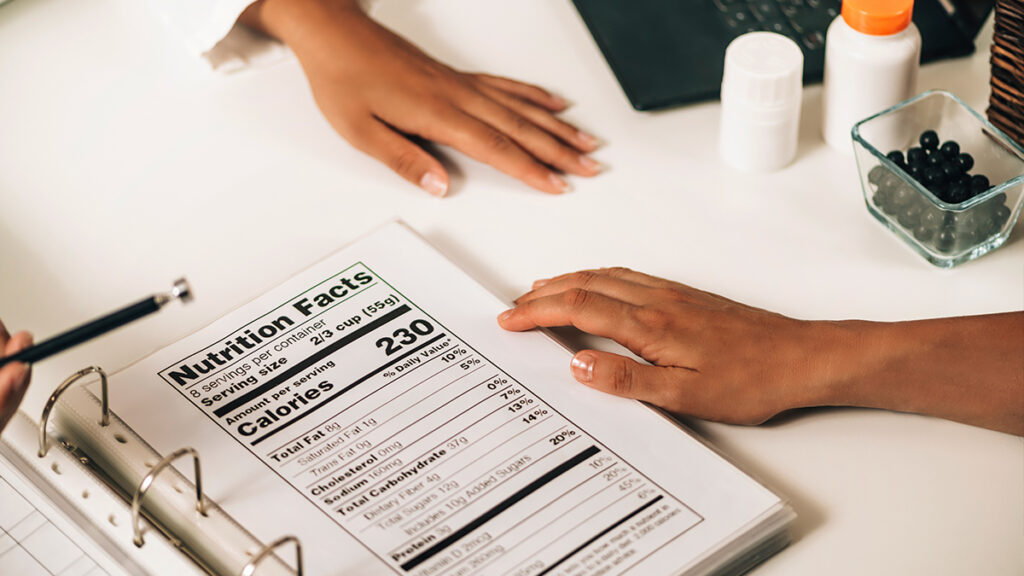
Foundations: The Nutrition Facts Label by the FDA
In the United States, the FDA first introduced the Nutrition Facts label in the early 1990s, aiming to give consumers consistent, science-based information. Since then, it has evolved significantly—most notably with a 2016 update that made serving sizes, calories, and added sugars more prominent. The design changes weren’t cosmetic; they reflected a deeper understanding of how people actually eat and what information helps them make better choices.
The updated label now makes it easier to see calorie counts at a glance, highlights the difference between total and added sugars, and adjusts serving sizes to more accurately match real-world consumption. These shifts have transformed the label from a dense block of data into a clearer, more practical tool for everyday use.
Front-of-Pack Labels and Global Trends
While the traditional nutrition facts panel remains the standard in the U.S., other countries have experimented with front-of-pack labeling systems to help shoppers make quick judgments. One popular example is the Nutri-Score, a color-coded and letter-graded system ranging from “A” (dark green, healthiest) to “E” (dark orange, least healthy). Foods earn better scores when they are rich in fiber, fruits, vegetables, or healthy fats, and worse scores when they are high in added sugar, sodium, or saturated fat.
While not without controversy, these systems attempt to bridge the gap between quick purchasing decisions and nutritional awareness. Their goal is to make healthy choices more intuitive—even for people who don’t want to study a detailed panel every time they shop.
The Key Areas to Master on Nutrition Labels
Serving Size: The Critical Starting Point
Serving size is the foundation for everything else on the label. It tells you the exact portion all other numbers are based on, whether that’s a cup, ounce, slice, or even a fraction of a package. If you misjudge the serving size, all the calorie and nutrient numbers will be misleading.
For example, a bottled drink may list a serving as half the bottle, with 90 calories per serving. If you drink the whole bottle, you’re actually consuming 180 calories, along with double the sugar, sodium, and other nutrients listed. Recognizing this helps you make accurate comparisons and avoid unintentional overconsumption.
Calories and Percent Daily Value: Nutrients in Context
Once you understand the serving size, calories are the next big piece of information. They measure how much energy you get from one serving. But calories alone don’t tell the full story—that’s where the Percent Daily Value (%DV) comes in.
The %DV shows how much of each nutrient in a serving contributes to your daily needs, based on a standard 2,000-calorie diet. As a general rule, 5% or less of a nutrient is considered low, while 20% or more is considered high. This makes it easier to spot whether a food is a significant source of beneficial nutrients like fiber and vitamin D—or a heavy source of less desirable ones like sodium and saturated fat.
Navigating Fats, Sugars, Fiber, and Sodium
The fats section breaks down total fat into saturated and trans fats. Saturated fats, when consumed in excess, can raise LDL cholesterol and increase heart disease risk. Trans fats are even more harmful and are being phased out of most foods, but they still appear in some processed products.
Sugars are now split into “total” and “added” sugars, which is a game-changer for label readers. Natural sugars from fruit or milk are less of a concern; it’s the added sugars that contribute empty calories without nutrients. Aim to limit these as much as possible.
Fiber is a nutrient you want more of—it helps with digestion, promotes fullness, and supports heart health. Look for foods with at least 3 grams of fiber per serving. Sodium, on the other hand, should be watched closely; high intake is linked to elevated blood pressure and increased cardiovascular risk.
Interpreting the Ingredient List and Health Claims
Beyond the nutrition panel, the ingredient list offers critical insights. Ingredients are listed by weight, with the largest amounts first. This is where you can spot hidden sources of sugar (like high fructose corn syrup, cane juice, or malt syrup) and salt (such as sodium nitrate or monosodium glutamate).
Health claims on the front of packaging—like “low-fat,” “immune-boosting,” or “made with whole grains”—should be treated cautiously. Sometimes these claims highlight one healthy aspect while distracting from less healthy ingredients. For example, a “low-fat” snack might be packed with added sugar to make up for lost flavor.
Why Labels Still Require Savvy Navigation
The “Jelly Bean Rule” and Misleading Claims
One famous example of misleading labeling comes from the so-called “Jelly Bean Rule.” It refers to an FDA guideline stating that adding vitamins to a sugary food doesn’t make it healthy. This was tested in a high-profile case against VitaminWater, where the product was marketed as a health drink despite containing large amounts of sugar. The takeaway? The front label can be persuasive, but the back panel tells the real truth.
Understanding Pronunciation Isn’t a Strategy
A popular myth says you should avoid any ingredient you can’t pronounce. But many essential nutrients—like cholecalciferol (vitamin D) or alpha-tocopherol (vitamin E)—have complex names but are perfectly safe and beneficial. Instead of judging by pronunciation, focus on whether an ingredient supports your health goals and whether it’s present in a reasonable amount.
Putting It All Together: A Real-World Example
Imagine you’re choosing a breakfast cereal. The front of the box boasts “made with real fruit” and “heart-healthy whole grains.” You flip to the back and see the serving size is ¾ cup—but your usual bowl holds at least a cup. At 150 calories per serving, you’re actually eating closer to 200. The label reveals 12 grams of added sugar—about a third of the daily limit recommended by health experts—and just 3 grams of fiber.
The ingredient list starts with whole grain oats but quickly moves to sugar, enriched flour, and artificial flavoring. The “real fruit” turns out to be a minor component, far down the list. With this knowledge, you might decide to swap the cereal for plain oats topped with fresh berries—cutting added sugar while boosting natural fiber and antioxidants.
Conclusion: Empower Yourself with Label Literacy
Learning to read nutrition labels effectively turns grocery shopping from a guessing game into an act of self-care. By focusing on serving sizes, calories, daily values, and key nutrients—and by scanning ingredient lists with a critical eye—you can see through marketing claims and choose foods that genuinely support your health.
In 2025 and beyond, as labeling continues to evolve and more transparency is demanded from food manufacturers, label literacy will remain your most reliable tool. It’s not about obsessing over every number but about building awareness. With practice, these panels stop feeling like tiny walls of text and start serving as your roadmap to a healthier, more informed way of eating.