Do We Need a UN for AI?

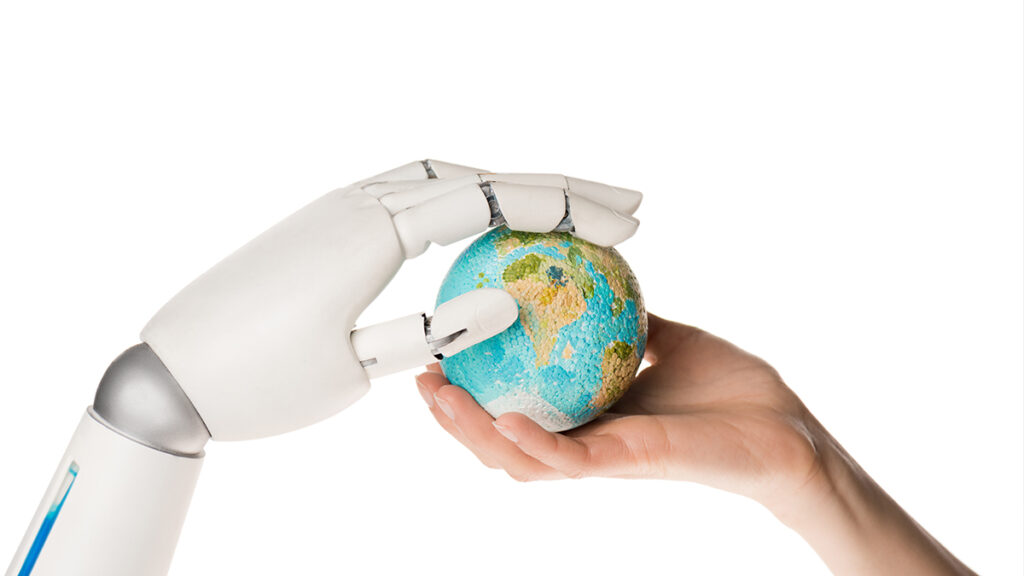
Artificial intelligence is advancing at a pace that few could have predicted even a decade ago. Once confined to research labs and science fiction stories, AI now powers the tools we use every day—virtual assistants, medical diagnostic systems, fraud detection algorithms, and the social media feeds that shape public opinion. More profoundly, AI is transforming economics, defense strategies, and geopolitics.
Yet despite its far-reaching influence, there is no unified global authority responsible for overseeing its development and deployment. This absence of coordination raises a pressing question: Do we need a centralized, multinational body—something like a “United Nations for AI”—to guide and regulate this transformative technology?
This discussion is no longer theoretical. Policymakers, technologists, and ethicists around the world are debating whether such a body could help prevent misuse, ensure fairness, and establish shared global standards. In this exploration, we’ll examine the motivations for creating such an institution, the dangers of leaving AI unchecked, the models we might use for global oversight, and the challenges such a body would inevitably face.
The Global Stakes of Artificial Intelligence
AI is not just another wave of innovation; it represents a profound shift in how power is created, distributed, and exercised. Its reach extends beyond convenience—touching matters of security, governance, and human rights.
From deepfake propaganda campaigns to autonomous weapons, AI applications increasingly influence matters of life, liberty, and global stability. The stakes are high: a decision about AI made in one country can have near-instant ripple effects across the world.
The technology itself knows no borders. A facial recognition model developed in one jurisdiction can be deployed in another with vastly different—or nonexistent—privacy protections. Generative AI systems can produce misinformation in dozens of languages before any single nation has the chance to respond.
In this context, the lack of a global governance structure is not just inconvenient—it’s dangerous. Current AI rules are fragmented, inconsistent, and often voluntary. This patchwork approach invites the risk of an AI arms race, widens the gap between rich and poor nations, and leaves the world vulnerable to cascading failures—whether from biased algorithms, economic disruption, or uncontrolled autonomous systems.
Which brings us to the core question: Should there be a global authority tasked with setting the “rules of engagement” for AI? And if so, what form should it take?
The Case for an International AI Governance Body
The argument for a “UN for AI” stems from a simple truth: some challenges are too vast and too interconnected for any one nation to manage alone. AI—like climate change or nuclear proliferation—affects all of humanity and demands cooperative solutions.
One of the most urgent concerns is the rise of AI-powered military systems. From autonomous drones to AI-enabled surveillance, the potential for rapid escalation in conflict is real and growing. Without binding global agreements—akin to the Geneva Conventions or the Nuclear Non-Proliferation Treaty—there is little to stop these technologies from being deployed in ways that could spiral out of control.
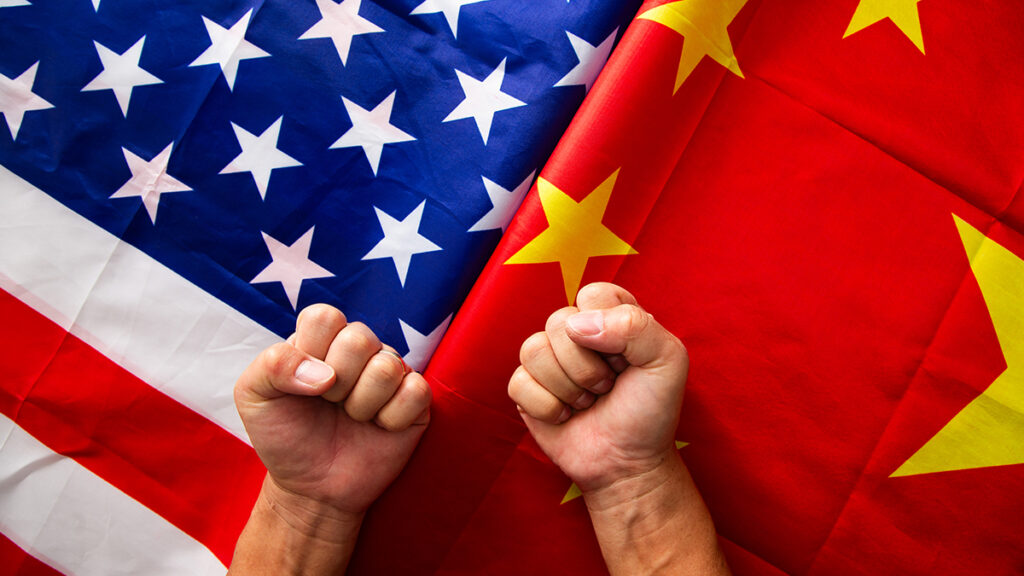
Beyond defense, AI could dramatically exacerbate global inequality. Wealthier nations with massive data sets and advanced computing infrastructure—such as the US and China—are far ahead in the AI race. Many developing nations risk becoming dependent on technology they had no role in shaping, further entrenching economic divides.
An international body could work to democratize access, provide resources for capacity-building, and broker fair data-sharing agreements. It could also set global ethical benchmarks for fairness, transparency, and accountability—benchmarks that transcend local politics while still respecting cultural diversity.
Finally, coordinated oversight could help restore public trust. In the absence of clear, enforceable rules, suspicion grows over how AI decisions are made, who benefits from them, and whether the systems are safe. A credible, transparent institution could help reassure the world that AI serves the many rather than the few.
What a “UN for AI” Might Look Like
To imagine such a body, it’s worth looking at existing international frameworks. The United Nations itself, founded in the wake of World War II, operates through specialized agencies like the World Health Organization (WHO), the World Trade Organization (WTO), and the International Atomic Energy Agency (IAEA).
A similar agency for AI could focus on coordinating research, setting safety and ethical standards, promoting data equity, and mediating disputes over AI use. It could also monitor compliance and develop international norms around sensitive areas like AI in warfare, misinformation, and algorithmic bias.
Another useful model is the Intergovernmental Panel on Climate Change (IPCC), which compiles scientific research to inform global policy. A comparable “Intergovernmental Panel on AI” could provide nonpartisan, evidence-based recommendations grounded in technical expertise.
Alternatively, a multistakeholder governance model—similar to ICANN (the Internet Corporation for Assigned Names and Numbers)—could unite governments, corporations, academics, and civil society. This approach would reflect the decentralized nature of AI development and prevent decision-making from being monopolized by any single interest group.
Whatever the structure, legitimacy would depend on three pillars: transparency, inclusivity, and enforceability. A “UN for AI” must not become a ceremonial talk shop. It must include voices from the Global South, indigenous communities, and underrepresented groups—those too often left out of technological decision-making.
Existing Initiatives—and Why They May Not Be Enough
Several organizations are already working on AI governance, but none yet offer the scale or authority needed for true global oversight.
- The OECD’s AI Principles, adopted by over 40 countries, promote transparency, robustness, and accountability.
- The European Union’s AI Act categorizes AI systems by risk level and imposes strict requirements on high-risk applications.
- UNESCO has created an ethical AI framework emphasizing human rights and sustainability.
Other efforts include the Global Partnership on AI (GPAI), the Partnership on AI (co-founded by major tech companies and NGOs), and the World Economic Forum’s Centre for the Fourth Industrial Revolution.
While valuable, these initiatives suffer from fragmentation, voluntary compliance, and limited scope. None possess the universal jurisdiction, enforcement powers, or political legitimacy of a UN-level institution. And with global powers like the US, EU, and China pursuing divergent regulatory paths, there’s a real risk of regulatory arbitrage, where companies simply move operations to jurisdictions with looser rules—triggering a “race to the bottom” in ethics and safety.
Challenges to Building a Global AI Governance Body
The idea is appealing, but the road to a “UN for AI” would be steep and uneven.
Sovereignty concerns are paramount. Many nations see AI as a cornerstone of their economic and military strategy and are reluctant to submit their programs to international oversight—especially in an era of geopolitical mistrust.
Value differences are another hurdle. Cultural views on privacy, fairness, and acceptable AI use vary widely. What one nation considers a dystopian surveillance system might be viewed by another as a vital tool for public safety.
Technical complexity adds another layer. AI is a rapidly evolving ecosystem, spanning everything from machine learning to robotics to generative models. Any governance body would need the agility, resources, and expertise to keep up with constant change.
And finally, enforcement is key. Without clear mechanisms for sanctions and accountability, a global AI body could easily become symbolic rather than substantive.
The Role of Civil Society and the Private Sector
Governments cannot and should not shoulder the responsibility alone. Civil society, academia, and the private sector have essential roles to play in shaping global AI governance.
Nonprofits can act as watchdogs, advocating for the protection of vulnerable communities. Universities can contribute the research and policy analysis necessary for evidence-based decisions. And private companies—particularly the tech giants developing cutting-edge AI—must be not only participants but accountable stewards of the technology.
However, participation must come with obligations: transparency, independent audits, and commitments to fairness and openness. Without these, industry involvement risks becoming little more than public relations.
The best governance models will be those that share power equitably, prevent capture by any single group, and keep human rights at the core of AI’s global development.
Conclusion: A Global Imperative
AI is rapidly becoming as central to global life as electricity, the internet, or nuclear power—and just as consequential. A “UN for AI” would not solve every problem, but it could help prevent arms races, standardize ethical norms, and ensure that the benefits of AI are more evenly distributed.
Creating such a body will be politically challenging, slow, and imperfect. But the alternative—a fractured, unregulated, and unequal AI ecosystem—carries far greater risks.