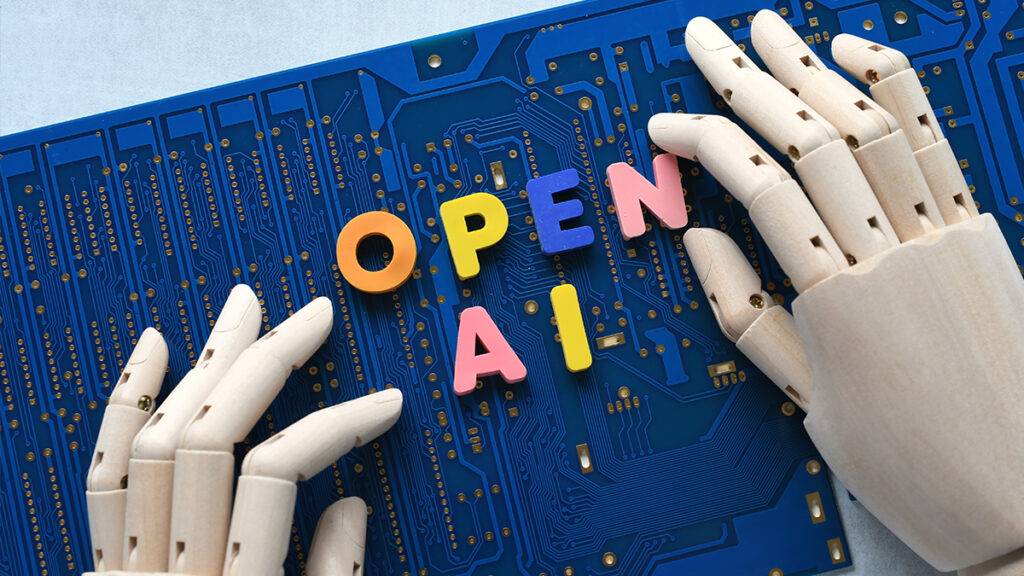
Open-Source AI Projects to Contribute to in 2025


Introduction
Artificial Intelligence is no longer just the domain of billion-dollar tech companies or academic research labs. The AI revolution has gone open-source, inviting global collaboration and innovation across industries and disciplines. As we step into 2025, the pace of AI advancement continues to accelerate—and open-source contributions are at the heart of shaping technologies that are not only cutting-edge but also ethical and accessible.
Whether you’re a seasoned machine learning engineer, a data scientist expanding your portfolio, or a student eager to gain real-world experience, the open-source AI ecosystem offers a rare opportunity to build, learn, and contribute to impactful projects.
Contributing to open-source AI isn’t only about writing code. It’s about joining a vibrant community of innovators working on natural language processing, computer vision, reinforcement learning, model interpretability, and much more. It’s also about grappling with practical challenges like algorithmic fairness, energy efficiency, and deployment at scale—issues central to today’s AI discourse. In 2025, more than ever, developers want their work to matter. Open-source AI offers that chance.
This guide explores the most exciting open-source AI projects gaining momentum this year. From large language models to ethical frameworks, multimodal tools, and privacy-preserving platforms, we’ll outline key opportunities where you can contribute—and shape the future of AI.
The Importance of Open-Source in AI’s Evolution
One of the defining technological trends of our time is the democratization of AI development. As powerful machine learning models and tools are made openly accessible, developers around the globe can now replicate, adapt, and innovate upon systems once considered the exclusive domain of tech giants.
Open-source AI fuels transparency, enhances reproducibility, and provides a counterbalance to the rising opacity of proprietary systems. It levels the playing field by letting researchers and developers test, improve, and extend models in the open. Projects like Hugging Face Transformers, Meta’s LLaMA, and Mistral show that you don’t need to work at Google or OpenAI to build world-class AI systems.
Moreover, open-source enables ethical scrutiny. When datasets, model weights, and training methods are made public, researchers can audit bias, evaluate robustness, and suggest improvements that serve the public good—not just corporate interests.
To contribute to open-source AI is to help build the scaffolding for the next generation of technology. It’s also a way to shape its direction, values, and applications from the ground up.
The Growing Influence of Community-Driven AI Projects
By 2025, the open-source AI ecosystem has expanded dramatically, branching into fields like multilingual NLP, privacy-preserving computation, and real-time generative interfaces. While foundational tools like PyTorch and TensorFlow remain essential, the community now embraces highly specialized, mission-driven platforms with global participation.
Most of these projects are hosted on GitHub, Hugging Face Hub, or decentralized platforms, maintained by collaborative teams rather than centralized corporations. Contributors take on a variety of roles—writing code, building datasets, annotating models, testing tools, reviewing pull requests, and even helping with governance.
Crucially, many open-source AI projects now attract funding through grants, public–private partnerships, or donations. This financial support allows long-term maintainability and gives contributors the opportunity to turn passion projects into careers. Some maintainers are now recognized thought leaders, researchers, or full-time professionals—having earned visibility and trust through open-source work.
AI development in this landscape is no longer strictly technical. It’s also cultural, educational, and social. Artists contribute to generative art tools. Humanists work on AI ethics. Educators create interactive platforms for learning. The ecosystem is richer for it.
Key Areas of Contribution in 2025’s Open-Source AI Ecosystem
Advancing Open-Source Large Language Models
Few areas are moving faster than the development of open large language models (LLMs). In 2025, open-source models like LLaMA 3, Mistral, Falcon, and Mixtral are pushing the boundaries of what’s possible outside corporate labs.
Projects driven by Hugging Face, EleutherAI, and Stability AI are democratizing model access, offering pre-trained weights, tokenizer configurations, and training recipes for developers to fine-tune and deploy their own generative apps.
Tooling ecosystems have exploded. Libraries like TRLLM and Axolotl help developers fine-tune models on consumer-grade GPUs. Quantization formats like GGUF allow high-quality inference on local machines. Inference engines such as vLLM and TGI optimize latency and memory use.
Contributors are building adapters, experimenting with retrieval-augmented generation, tuning performance with DeepSpeed and Accelerate, and writing guides that help the community navigate this new LLM frontier.
Ethical and Explainable AI Initiatives
Responsible AI is no longer optional—it’s essential. With increased regulatory pressure and real-world deployments in finance, healthcare, and justice, ethics and explainability are major focal points for open-source contribution.
Projects like Fairlearn, Aequitas, and Responsible AI Toolbox provide robust frameworks for fairness analysis, bias detection, and model transparency. Others, like Model Cards and Data Statements, are improving AI documentation practices.
Contributors can help develop fairness metrics, implement visualization dashboards, audit datasets, or write explainability modules. These contributions directly support developers building systems that are safer, more inclusive, and more accountable.
As the EU AI Act and similar regulations come into effect, open-source tools for compliance and risk analysis will only grow in importance.
Multimodal AI and Generative Art Models
Generative AI has moved beyond text. Tools like Stable Diffusion, OpenVoice, WhisperX, and AudioCraft are unlocking creative workflows across image, audio, and video.
These projects are highly collaborative, with contributors working on model architectures, diffusion algorithms, real-time rendering, data curation, and UX design for end-user tools. Open-source multimodal AI is being adopted in animation studios, music production, accessibility tech, and education.
Emerging use cases like personalized AI avatars—combining text, voice, and visuals—are gaining traction. Contributors with knowledge in GANs, 3D generation, speech synthesis, or real-time pipelines are in high demand.
Decentralized and Privacy-Preserving AI
Data privacy has become a core concern for both developers and users. As a result, projects focused on federated learning, encrypted inference, and on-device AI are growing rapidly.
Libraries like Flower, OpenMined, and TensorFlow Federated provide frameworks for training models without sharing raw data. This is especially relevant for industries where data sensitivity is high—such as healthcare, legal tech, and education.
Contributions here may involve implementing secure protocols, compressing models for edge deployment, or improving accuracy in low-data settings. The need for privacy-aware AI is growing alongside consumer awareness and regulatory frameworks.
Tools for AI Education and Accessibility
As AI becomes a foundational discipline, educational and accessibility-oriented tools have flourished. Projects like FastAI, OpenPrompt, MLU-Explain, and Kaggle Notebooks help beginners enter the space without overwhelming complexity.
These tools often emphasize usability, guided examples, and clear documentation. Contributors can build tutorials, write translated guides, create sandbox environments, and help simplify interfaces—broadening access to AI for learners worldwide.
By lowering the barrier to entry, these projects ensure AI remains a global and inclusive endeavor—not one restricted by geography, language, or privilege.
Getting Involved: Strategies for New Contributors
If you’re new to open-source AI, diving in can feel daunting—but the community is welcoming and well-structured. Most projects maintain Discord, Slack, or GitHub Discussions where you can introduce yourself and ask questions.
Look for issues labeled “good first issue” or “help wanted.” These are designed to ease newcomers in, covering tasks like bug fixes, documentation improvements, test writing, or small feature updates.
Read the project’s CONTRIBUTING.md and CODE_OF_CONDUCT.md files. These outline communication expectations, review standards, and collaboration norms. Respectful, well-documented contributions are as valued as technical expertise.
Over time, you can grow into deeper roles—helping triage bugs, reviewing code, leading features, or even maintaining parts of the project. Many contributors have transitioned into full-time roles, research positions, or leadership tracks after gaining credibility in open-source.
Conclusion
The open-source AI movement is accelerating into 2025 with energy, inclusiveness, and purpose. It’s democratizing access to innovation, ensuring transparency, and reshaping the future of machine learning from the ground up.
From training large language models and building ethical frameworks to designing generative art tools and improving AI education, there’s room for everyone to contribute. Whether you write code, document tutorials, curate data, or support community growth—your efforts matter.
Contributing to open-source AI isn’t just good for your portfolio—it’s a way to learn deeply, connect globally, and help define how the world interacts with intelligent systems. The real innovation in AI isn’t behind a corporate firewall or hidden in a patent—it’s unfolding in public, in repositories, forums, and virtual meetups.